[Unpad.ac.id, 28/09/2016] The hope in eradicating rabies in West Java provice can be achieved by focusing the attention to the health sector synergy of humans, animals and the environment. Through the synergy which is known as the concept of one health, zoonotic diseases transmitted to humans animals can be addressed intensively and earlier. In addition, the support of policy makers is also needed.

Thus, among others, said Professor of Faculty of Animal Husbandry, Universitas Padjadjaran, Prof. Roostita L .Balia, DVM., M.App.Sc., Ph.D., as a guest speaker at Padjadjaran Respond activities themed “Readiness of West Java and Indonesia in Toward the Rabies Free in Asia in 2020 and the World in 2030” in Executive Lounge Unpad, Jalan Dipati Ukur 35 Bandung, Wednesday (28/09). This event was held in commemoration of World Rabies Day every year on September 28th.
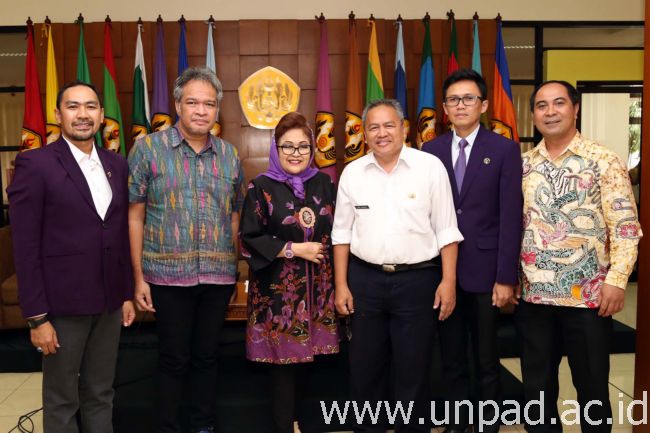
Besides Prof. Roostita, also attending as speakers were: Arif Hidayat, drh (Head of Division Animal Health and Veterinary Public Health Department of Animal Husbandry of West Java), Rudi Wisaksana, dr., SpPD-KPTI (Lecturer of Faculty of Medicine Unpad), and Pranyata Tangguh Waskita, drh (Ad. In. Head of Vetenarian Association Indonesia Jabar), also as moderator Dwi Wahyudha Wira., Msi (Lectured of FTIP Unpad).
“Synergy sectors of animal, human, and ecosystems were conducted through five pillars including socio-cultural, technical, organizational, political, and resources. Without the support of policy-making, for example, it is difficult to realize the integrated zoonoses prevention, “said Prof. Roostita.
Same with Prof. Roostita, Pranyata Tangguh Waskita of PDHI Jabar said that the support of policy makers are included in the dynamics of the eradication of rabies in West Java and Indonesia in general. Approximately a week ago, the government has dissolved the National Commission for Control of Zoonoses for reasons of budget efficiency. Meanwhile the Law on Veterinary Authority in Indonesia has not yet ratified. Not to mention, a change in the organizational structure of work procedures (SOTK) in the area. On this day, Wednesday (28/09), West Java Parliament have agreed to revise organizational structure and the provincial government of West Java, one of which is the merger of the Department of Livestock to Food Security Agency Jabar.
 Furthermore, Pranyata explained, PDHI has implemented a number of activities to help realize the rabies-free province of West Java. In the internal sphere, it has been implementing programs PDHI rabies vaccination services, Animal population control program of Rabies Animal (HPR) through sterilization or castration, as well as rabies vaccination by veterinarians.
“In addition, PDHI also has established cooperation with hospitals and veterinary clinics government, in collaboration with the Department of Animal Husbandry in the city/district and province, working with the community affectionate animals, in collaboration with universities, also held a talk show on media as an educational to the community, “said Pranyata.
But as acknowledged by Pranyata, it has not cooperated with the Indonesian Doctors Association (IDI) and the Department of Health at the city/county or province in zoonotic diseases eradication program, particularly rabies.
While Arif Hidayat, DVM of the Animal Husbandry Department Jabar said that the governor has declared rabies free West Java in 2018, and he remains optimistic and strive strong realize these targets. However, he admitted they recorded rabies cases occurred in West Java in 2016.
“The barriers that occur because of the lack of coordination between animal health workers, weak coordination with the Health Department, limited human resources involved, as well as the lack of understanding of society that has not reported cases of rabies bite,” said Arif Hidayat. *
Reported by Erman