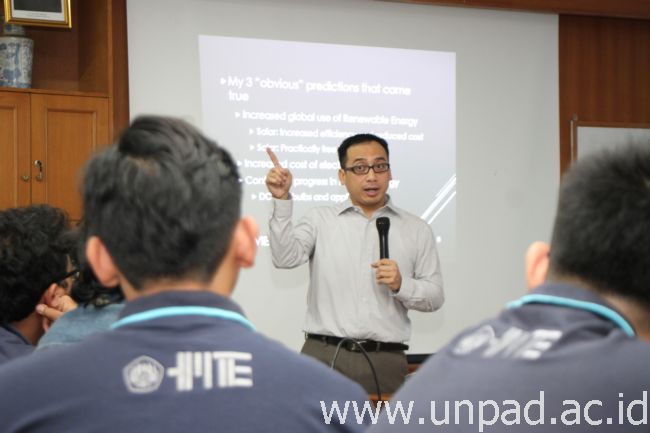
[Unpad.ac.id, 5/10/2016] Professor of Faculty of Agriculture and Director of Innovation, Corporate Academic, and Business Universitas Padjadjaran, Prof. Dr. Tualar Simarmata, Ir., M.S., was selected as one of the Top 10 Innovators Indonesia in the National Innovation Competition held by South Tangerang Global Innovation Forum (NIC-TGIF) 2016, September.
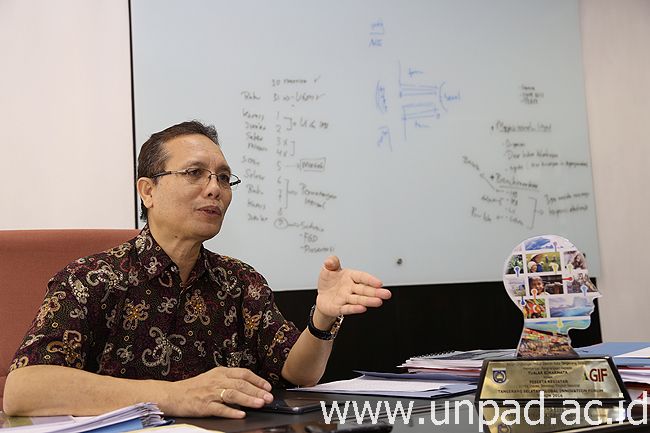
Prof. Tualar along with 9 other innovators was chosen based on innovation research to support the implementation of the Sustainable Development Goals (SDGs) in Indonesia. In the competition, Prof. Tualar won an award for his efforts in developing the “Innovation-Based Controlled Aerobic Rice Intensification Organic” (IPATBO).
“This is a competition that consists of several categories that support the sustainability of the national program,” said Prof. Tualar when interviewed PR Unpad, Wednesday (5/10).
IPATBO technology has been developed by Prof. Tualar since 2006. This technology is a production technology innovations through integrated rice paddy soil fertility restoration. The process uses a technique of twin seedling. This technique is said to be able to save the seeds, conserve water usage, as well as utilizing organic-based fertilizers and biological (biomelioran).
Organically based, this innovation uses straw as a source of nutrients compost soil microbes that can improve the quality of land in a short time. Quality is of course different if using inorganic fertilizers. Although able to increase rice productivity, on the other hand inorganic fertilizers have a negative impact on soil and trigger the acceleration of land degradation.
“The problem is Indonesian food security. On the other hand, our land is getting ‘tired’, reduced productivity, reduced water, so we have designed an organic-based water-saving technology to increase productivity while restoring soil fertility in a sustainable manner,” said Prof. Tualar is also an expert of Soil Biotechnology.
Results of IPATBO technology is reducing water usage by up to 35%, reducing the use of inorganic fertilizers by 25%, as well as saving seeds up to 50%. IPATBO is also able to increase the productivity of the land until doubled.
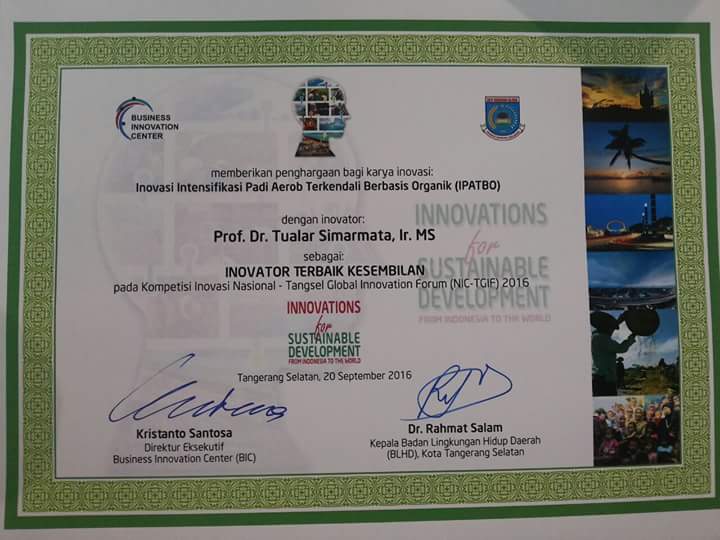 Furthermore, Prof. Tualar said, this technology has been applied in various regions in Indonesia. In academic activities, until the current IPATBO related research has produced 4 Doctoral and many produce graduates Masters and Scholars.
Prof. Tualar has many research in the field of agriculture. The results have earned a variety of patents for product research. In addition to obtaining the patent, such products have been mass produced in collaboration with industry.
Various innovations produced by scientists nationwide proved Indonesia is ready to support the implementation of SDGs. Only, Prof. Tualar said, the readiness depends on the government’s willingness to further support the various related innovations.
Furthermore, Prof. Tualar say, whether or not there SDGs, Indonesia should actually be ready to run a variety of programs that are currently the main destination SDGs. “The problem is we want to or not. If you want, meaning that it must be shown with real,” he concluded. *
Reported by Arief Maulana / eh