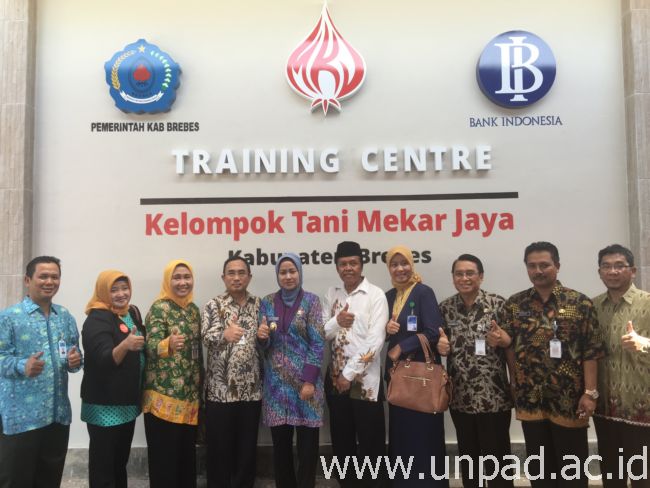
[Unpad.ac.id, 21/11/2016] During this time, when it comes to decentralization and regional autonomy, we often only focus on district, provincial, and municipal developments. There has been less attention to the decentralization of village governance, community life, and rural development.
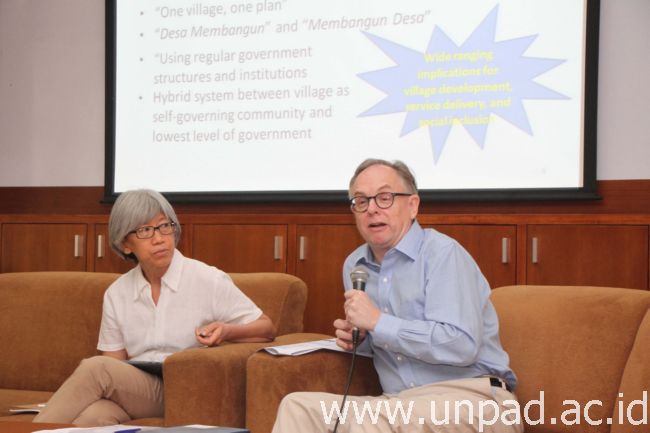
Professor of Faculty of Social and Political Sciences, Prof. Dede Mariana pointed it when speaking at the BIES Economic Dialogue and Forum held by Center of Economics and Development Studies (CEDS) Unpad in cooperation with Australian National University (ANU) Indonesia Project at the Executive Lounge Unpad, Jln. Dipati Ukur No. 35 Bandung, Monday (21/11). On the occasion, discussed the study entitled “Village Governance, Community Life, and the 2014 Law Village in Indonesia” by Leni Dharmawan, Hans Antlov, and Anna Wetterberg that has been published in the Bulletin of Indonesian Economic Studies (BIES) Vol. 52 in 2016.
Furthermore, Prof. Dede said that based on the study, there are still concerns in the implementation of Law No. 6/2014 on village. In fact, based on the PNPM program, it shows that the potentials of villages and communities can run the program and oversee effective rural infrastructure projects, as well increase productivity and prevent corruption.
“So, it might increase the management capacity of the village,” said Prof. Dede.
According to Prof. Dede, Law No. 6/2014 on village itself is meant to revitalize rural development, implement decentralization, and strengthen democratic institutions of the village.
Also attended in the program, Leni Dharmawan and Hans Antlov discussing the results of their research. One of the outcomes of the research is the lack of a companion role in empowering the community. At present, the companions are mostly known to be instrumental in supporting the village chief in administrative affairs.
They also discovered that not many villages use the funds to boost the economy of the village. They are distributed for the administration and infrastructure of the village, not for productive investments. *
Reported by Artanti Hendriyana / eh