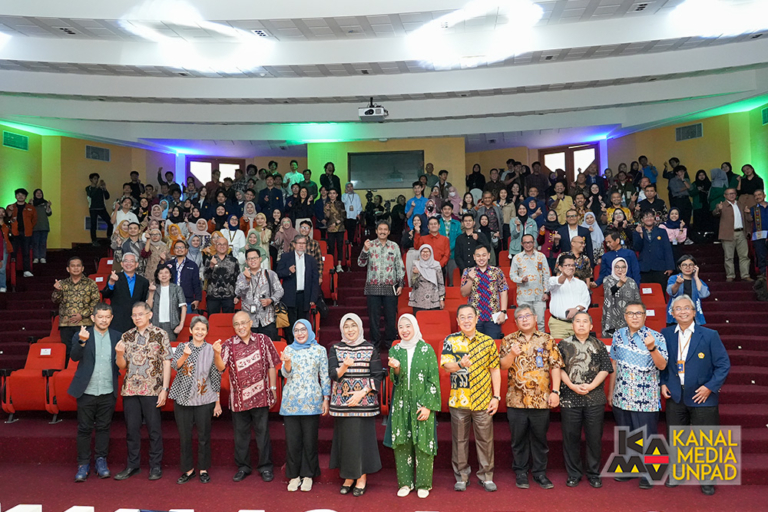
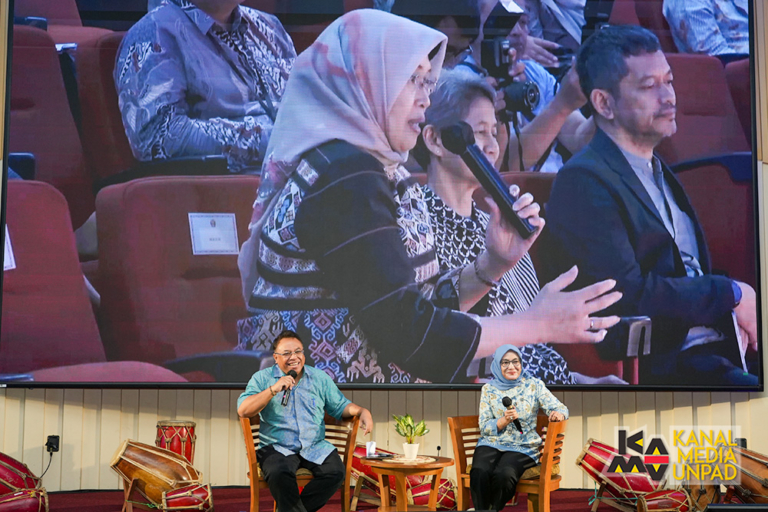
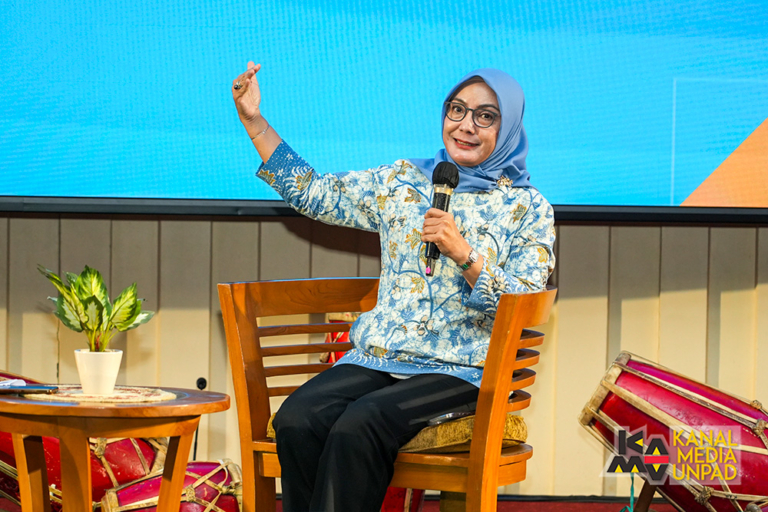
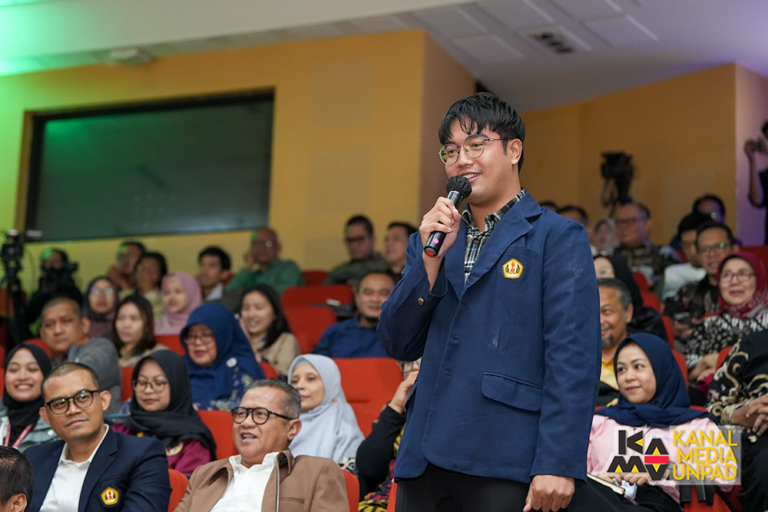
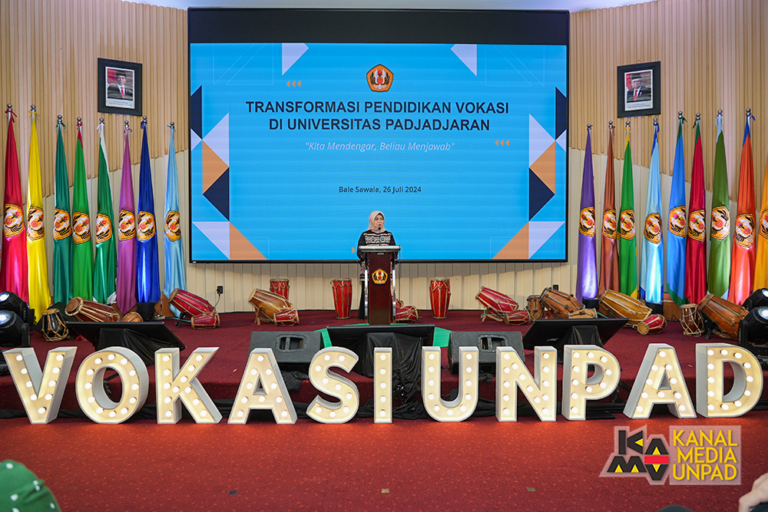
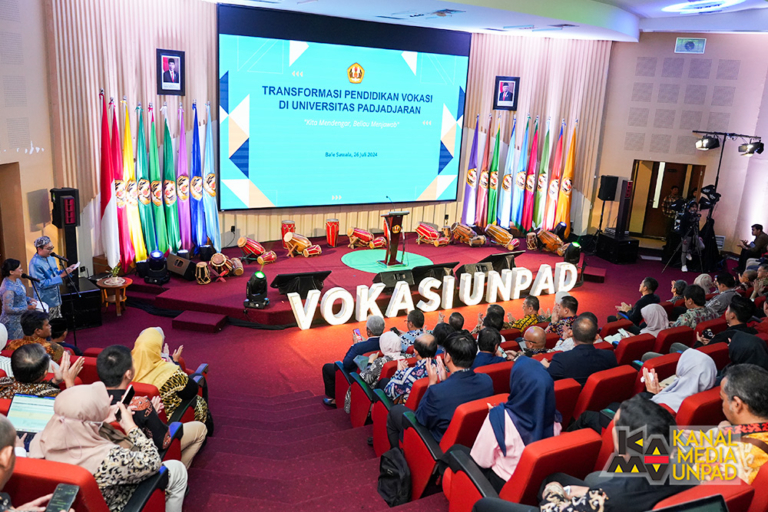
[Unpad Media Channel] To achieve the transformation of vocational education, Universitas Padjadjaran has launched a Vocational School through the event of Unpad Vocational School Launch & Talkshow “We Listen, He Answers” that is held at Bale Sawala, Unpad Rectorate Building, Jatinangor, Friday (27/7/2024).
This event is attended by the Director General of Vocational Education Dr. Ir. Kiki Yuliati, M.Sc., the Rector of Unpad Prof. Rina Indiastuti, and the Chair of Academic Senate Prof. Dr. Ir. Ganjar Kurnia, DEA.
In his speech, the Rector of Unpad said that the transformation of the Applied Bachelor’s degree program at Unpad, which was initially under the faculty, to being managed by the Vocational School aims to optimize its implementation so that it does not overlap with academic education.
Furthermore, the curriculum of the Vocational School at Unpad is designed to address current and future job market needs, skills requirements, and demands. Through the designated curriculum, Vocational School at Unpad can fulfil the demands from industries related to the output of higher education.
“Unpad is dedicated to meeting industry needs by producing Applied Bachelor’s graduates who not only possess the knowledge and skills as mandated by the Indonesian National Qualifications Framework (abbreviated as KKNI) but also have experience participating in innovation activities and the commercialization of research outcomes from the campus,” said the Rector of Unpad.
The Rector of Unpad explained that Vocational or Applied Bachelor’s students at Unpad acquire knowledge that is drawn from the world of work and industry. Besides, vocational students are also equipped with practical skills and supported by certifications that are highly valuable in the business and industrial work sectors.
Aside from preparing skills based on their specific study programs, Unpad also anticipates the students with useful skills for the future. Hopefully, through these skills, graduates of the Vocational Program at Unpad can continue to have a commitment to continuous learning even in the workplace.
“We are also anticipating future job market needs, focusing on future skills and digital skills. Unpad requires that graduates of its Applied Bachelor’s programs must continue learning in their workplaces, making lifelong learning a necessity,” said the Rector.
Moreover, the Rector hopes that students from the Vocational program always be eager to develop broader skills to become a professionals in the future and to produce human resources as part of the 2045 Golden Indonesia vision.
“So, not only ready to work, but they also can have a professional career because they have the ability, knowledge, practical experience, and so on. They become a new solution without relying solely on theory; they can continuously address practical problems they encounter today or in the future,” she explained.
In addition, the Director General of Vocational Education Dr. Ir. Kiki Yuliati, M.Sc. said that basically, the graduates of the Vocational program can master two types of competencies, such as permanent skills, also known as soft skills, and expiring skills, across various spectrums relevant to their field.
Other than that, the graduates of the Vocational program are also expected to have lifelong learning abilities formulated through three competencies, namely the ability to learn, the ability to think, and the ability to realize.
“First is the ability to learn. Second is the ability to think, and lastly, the ability to realize. This is because a characteristic of vocational education is turning abstract concepts into concrete results. Vocational individuals must be able to transform abstract ideas into tangible outcomes,” said Kiki.
On that occasion, the Chair of the Academic Senate Prof. Dr. Ir. Ganjar Kurnia, DEA delivered that the establishment of a Vocational School at Unpad, will clarify the implementation of education between academic bachelor’s degrees and applied bachelor’s degrees.
“The most important point is that there is actually a significant difference between academic education and vocational education. In my opinion, if managed separately, it will be much clearer,” said Prof. Ganjar. (arm/SA)*