[Unpad Media Channel] The team of the Faculty of Pharmacy at Universitas Padjadjaran conducts research to identify the variety of chitinolytic microorganisms found in seawater using chitin substrate functionalized from green mussel waste. In this research, green mussel waste was obtained from the coastal area of Kejawanan Beach, Cirebon.
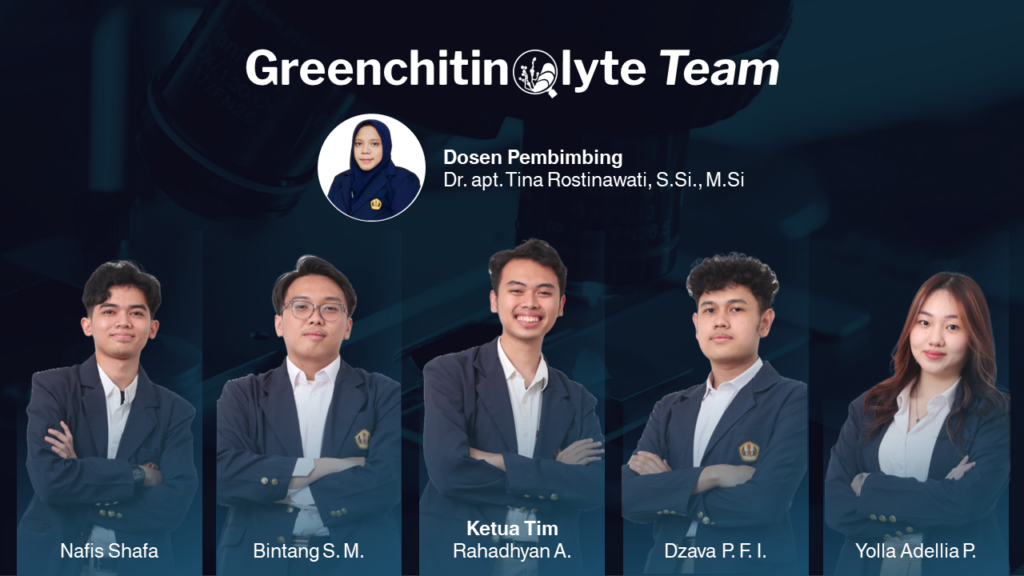
The research team consists of Rahadhyan Adnyanaschah as the leader, Dzava Prawinsyah Fairus Ismail, Bintang Satrio Mahardika, Yolla Adellia Putri, and Nafis Shafa as team members under the supervision of Dr. Tina Rostinawati, S.Si., M.Si. The team successfully secured funding under the Exact Research Student Creativity Program (Program Kreativitas Mahasiswa-Riset Eksakta or PKM-RE) from the Ministry of Education, Culture, Research, and Technology in 2024.
The research results are hoped to benefit the treatment of fungal infections causing candidiasis.
Candidiasis is an opportunistic fungal infection caused by Candida species, including Candida albicans. This species is identified as having cell walls composed of chitin compounds. Therefore, one effort to address the growth of fungal-causing candidiasis is to destroy the chitin in C. albicans.
Chitinolytic activity (chitin and lytic, meaning breaking down) is needed to destroy the chitin in C. albicans, which is owned by the chitinase enzyme in several microorganisms. Through this activity, microorganisms are found abundantly in seawater due to the high chitin content in marine organisms such as shrimp and shellfish. Types and varieties of chitinolytic microorganisms will be then identified through the screening process of chitinolytic bacteria.
“This research is expected to give information related to the varieties of chitinolytic microorganisms which have potential as an anti candidiasis while treating the accumulation of waste in the marine ecosystem by harnessing the resources inherent to the sea itself,” said Rahadyan in the release.
This study obtained seawater isolates from Kejawanan Beach at three different distances: 5.00 km, 5.08 km, and 5.18 km from the coastline. The purpose of the study was to identify the differences in the variety of chitinolytic microorganisms from each of the distances.
Based on laboratory testing, bacteria have been cultured from seawater isolates using chitin substrate media derived from green mussel shells. It proves that seawater contains microorganisms with chitinolytic activity so that it can grow in the chitin media. After that, the bacteria obtained are characterized by morphology, gram staining, and biochemical tests. The screening result will also be specified as related to the bacteria’s identity and is analyzed for their relationship or relatedness with other bacteria.
The other testing is determining the chitinolytic activity of chitinase enzymes using UV-Vis spectrophotometry and assessing anti candidiasis activity against C. albicans through inhibition assays.
“This chitinolytic microorganism is expected to produce effective inhibition against C. albicans, allowing these microorganisms to potentially be utilized as a safe treatment for candidiasis,” said Rahadhyan. (art/SA)*