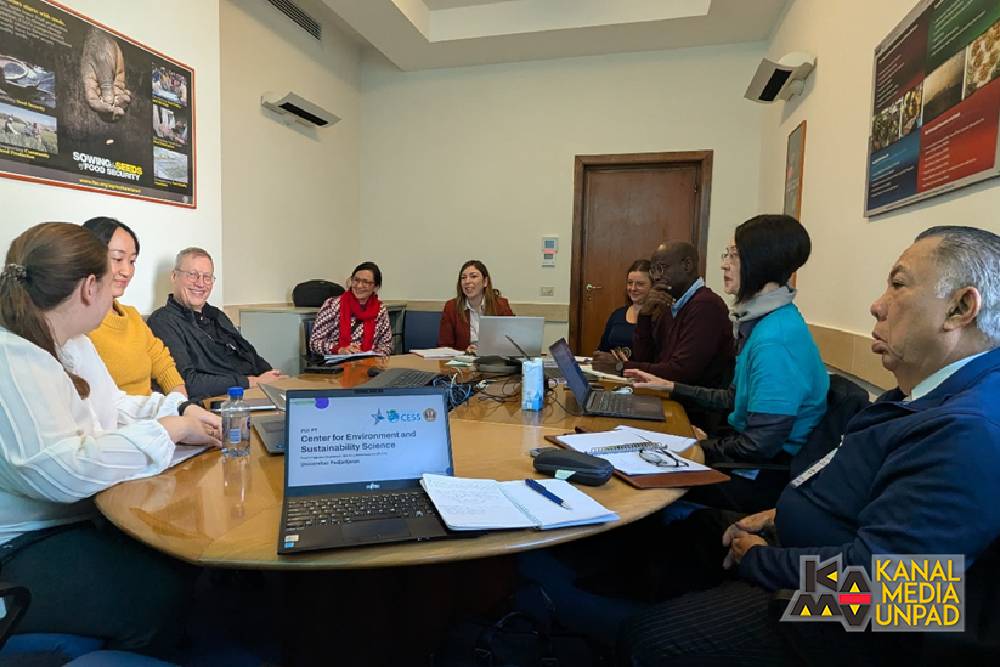
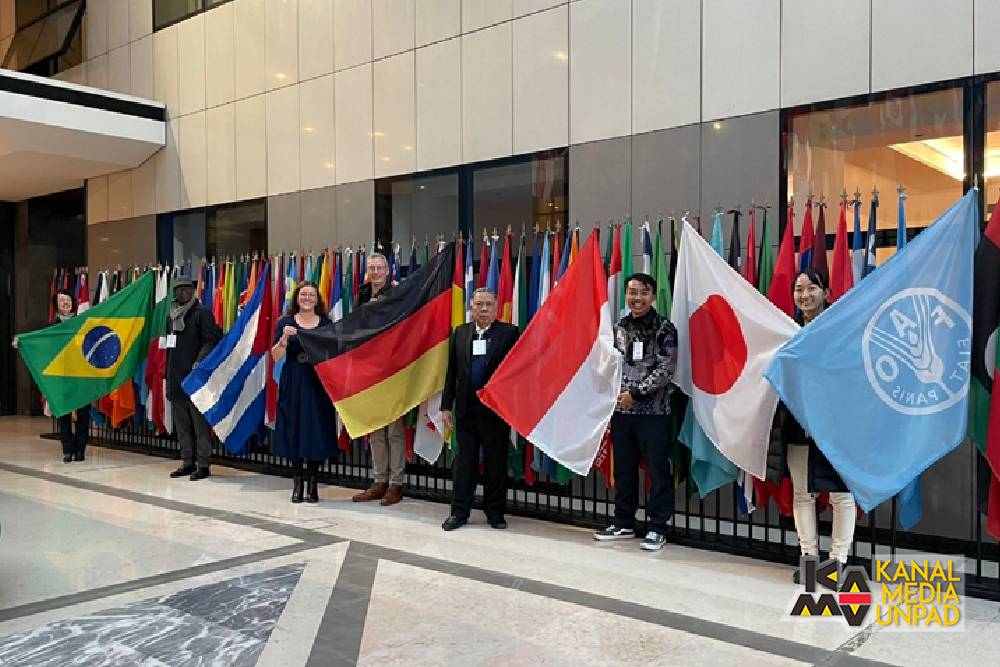
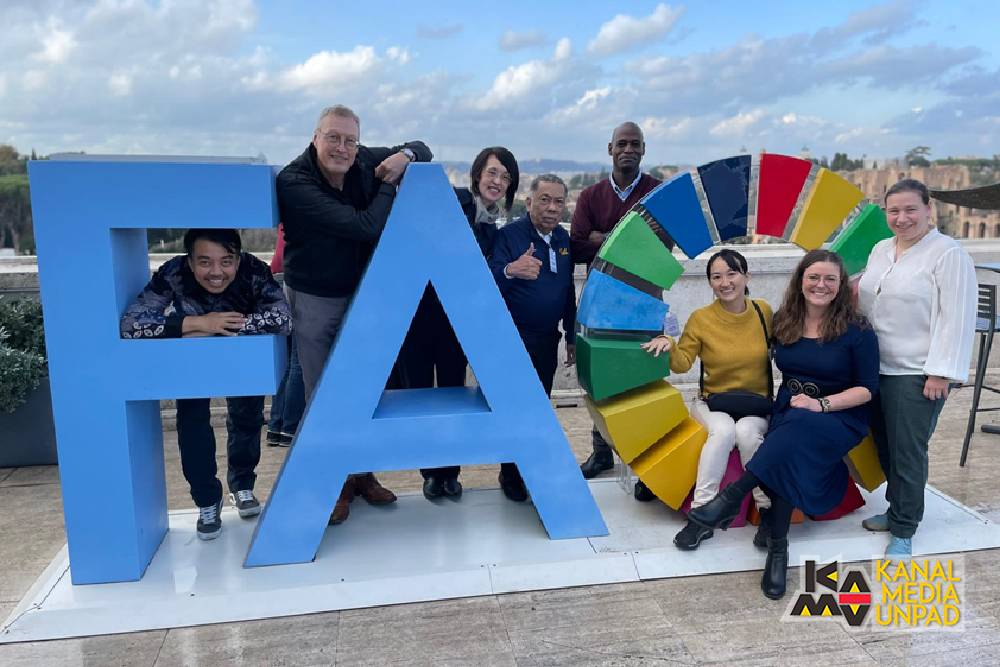
[Unpad Media Channel] To strengthen global collaboration on climate-resilient urban agriculture based on cultural heritage, the Center for Environment and Sustainability Science (CESS) at Universitas Padjadjaran visited the headquarters of the Food and Agriculture Organization (FAO) in Rome, Italy, on November 25th-26th, 2024. This visit was part of the Integrated Study on Urban Agriculture Heritage (INSUAH) initiative, an international effort aimed at integrating local cultural values into sustainable urban agriculture practices to address climate change challenges.
During the visit, Dr. Gemilang Lara Utama, S.Pt., M.I.L., Head of CESS Unpad, and senior researcher Prof. Oekan S. Abdoellah, Ph.D., presented their findings on the role of cultural heritage in building resilient and adaptive urban agriculture systems in Bandung, Indonesia. Their presentation also highlighted insights on how cultural heritage is reflected in various urban agriculture typologies outlined in the FAO Urban and Peri-urban Agriculture Sourcebook.
The INSUAH team, comprising international experts such as Prof. Frank Lohrberg and Katharina Christenn, M.A. (Aachen University, Germany), Akiko Iida, Ph.D. (University of Tokyo, Japan), Luciana Itikawa, Ph.D. (São Paulo University, Brazil), and Prof. Jorge Pena Diaz (Technical University of Havana, Cuba), engaged in discussions with FAO representatives.
On the first day, the team was welcomed by FAO’s Plant Production and Protection Division, led by Dr. Guido Santini, who also introduced global initiatives such as World Agriculture Watch and Green Cities Initiatives. The second day focused on deeper discussions with FAO’s Climate Change Department, represented by Clelia Maria Puzzo, Program Coordinator for Globally Important Agricultural Heritage Systems (GIAHS).
The discussions emphasized the role of local wisdom and cultural values in enhancing urban food security. One key highlight was Bandung’s cultural farming philosophy, “Ngindung Ka Waktu, Mibapa Ka Jaman” (Adapting to Time and Embracing Innovation), which exemplifies dynamic conservation by integrating tradition with innovation.
This approach positions cultural heritage as a foundation for urban agriculture development through adaptive and collaborative policies that allow local communities to embrace innovation while preserving traditions. The discussions also explored urban agroforestry systems, emphasizing plant diversity in small urban spaces. This system promotes farmer resilience through diversified income, ecosystem benefits, and socio-cultural functions.
These approaches align with FAO’s initiatives to strengthen food security through inclusive methods linking rural-urban interactions and urban greening programs. Globally, INSUAH’s strategies aim to serve as adaptive models for tackling urbanization and climate change while fostering sustainable urban agriculture development.
The visit by CESS Unpad reflects Universitas Padjadjaran’s commitment to advancing local knowledge for global impact. Through collaboration with FAO and international partners, Unpad continues to play an active role in creating innovative solutions for climate-adaptive urban food security while promoting Indonesia’s cultural values on the global stage.This initiative not only strengthens Unpad’s academic relevance but also provides tangible contributions to communities and the environment sustainably. (CESS Unpad Press Release/SA)
Source: CESS Unpad