[Unpad Media Channel] The Indonesia-India Bioresources Consortium (IIBC), leads by Universitas Padjadjaran in collaboration with the Indonesian Students Association (abbreviated as PPI) in India, hosts a series of webinars to explore the bioresource potential in both countries. The event aims to foster synergy among various stakeholders to raise awareness about the importance of sustainable bioresource management.
The Chairman of IIBC, Prof. Dr. Eng. I Made Joni, who is also a professor at Unpad, said that IIBC is expected to drive strategic collaborations between Indonesia and India in bioresource management. According to him, there are shared challenges such as environmental issues, market competition in the use of bioresources for herbal pharmaceuticals, and others. On the other hand, there are significant opportunities in the health sector, particularly in expanding bioresource markets for export. Prof. Made Joni also appreciated the presence of Aldrin Herwany, the Education and Cultural Attaché of the Indonesian Embassy in New Delhi, as well as the speakers, students, and alumni from India.
The Chairman of PPI India, Farras Chaidhar Rahman, emphasized the strategic role of bioresources in environmental sustainability, technological innovation, and future economic development.
“I hope this webinar serves as the starting point to strengthen collaboration between Indonesia and India, particularly in the field of bioresources,” said Farras.
In the webinar titled “Potential of Bioresources in Indonesia and India”, held on Sunday, December 22, 2024, Universitas Padjadjaran Professor, Prof. Rani Maharani, Ph.D., spoke alongside Muhammad Abdul Rouf, a Ph.D. student in Molecular Biology at Université de Montréal, Canada, and Rakanita Arifah, an intern at CH. Brahm Prakash Ayurved Charak Sansthan, New Delhi.
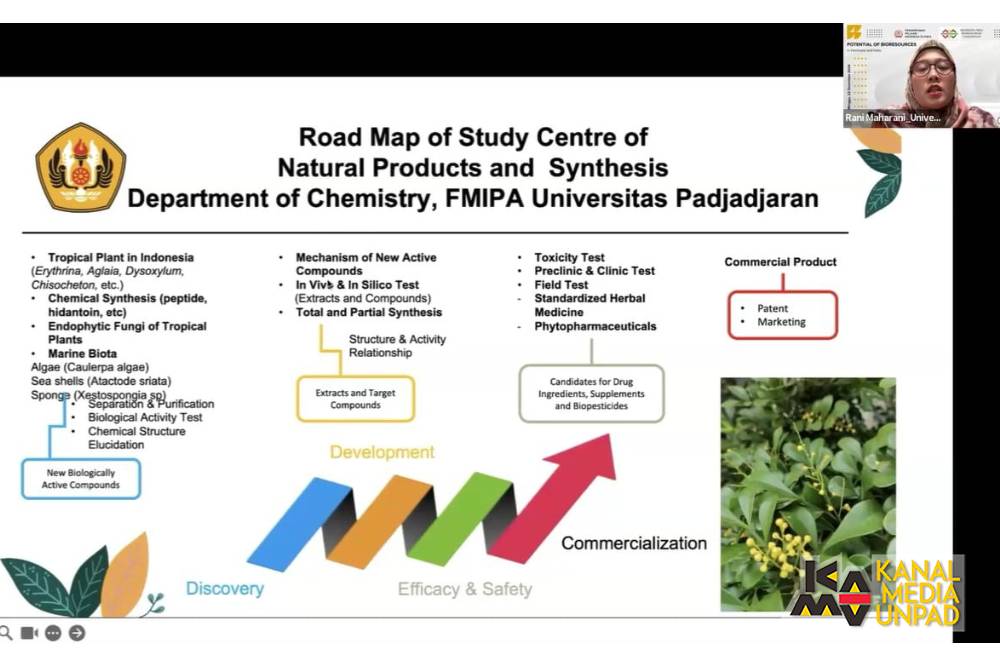
Prof. Rani highlighted that natural compounds from plants, microorganisms, and other bioresources could serve as raw materials for creating new pharmaceutical compounds. Through a multidisciplinary approach, she explained the process of bioresource exploration to chemical compound formulation, ready for clinical trials. Key challenges include sustainable exploitation of bioresources and the necessity of technological innovation to address them. Prof. Rani also presented concrete case studies demonstrating successful utilization of bioresources in modern medicine.
Her presentation aimed to provide participants with insights into the importance of scientific collaboration in accelerating the discovery of safer, more effective, and environmentally friendly drugs. This session underscored the role of bioresources as an innovative solution to support the development of sustainable modern pharmaceuticals.
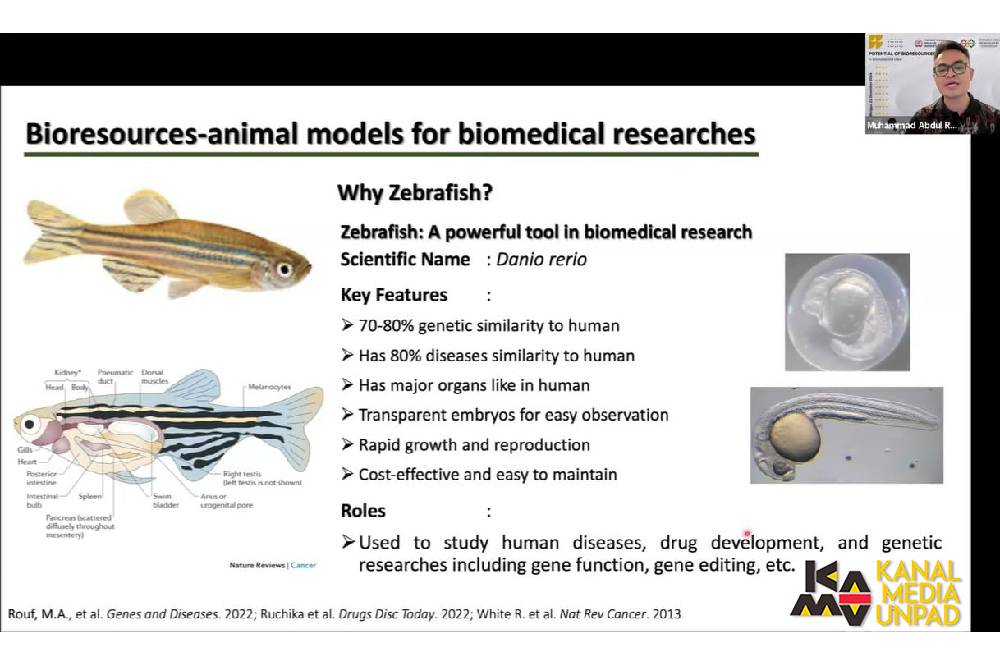
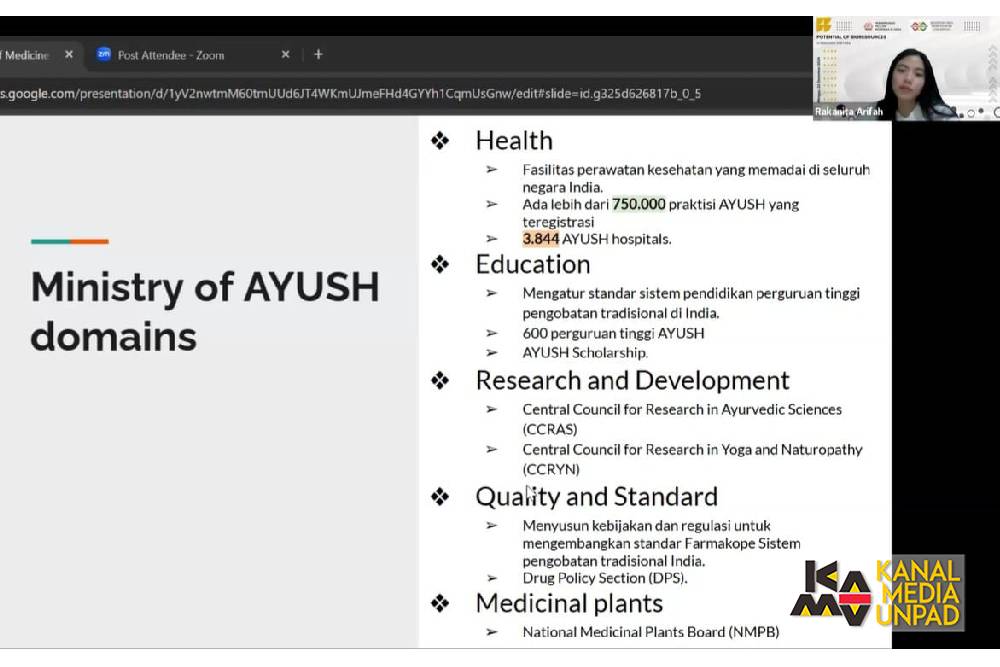
Moreover, Muhammad Abdul Rouf, Ph.D., discussed the biodiversity potential of Indonesia and India in biomedical research, particularly through the use of Zebrafish models. Rakanita Arifah introduced traditional Indian medical systems, emphasizing the importance of leveraging traditional bioresources to support global public health. (Release from Finder Unpad)
Source: https://www.finder.ac.id/post/kolaborasi-bioresources-indonesia-india