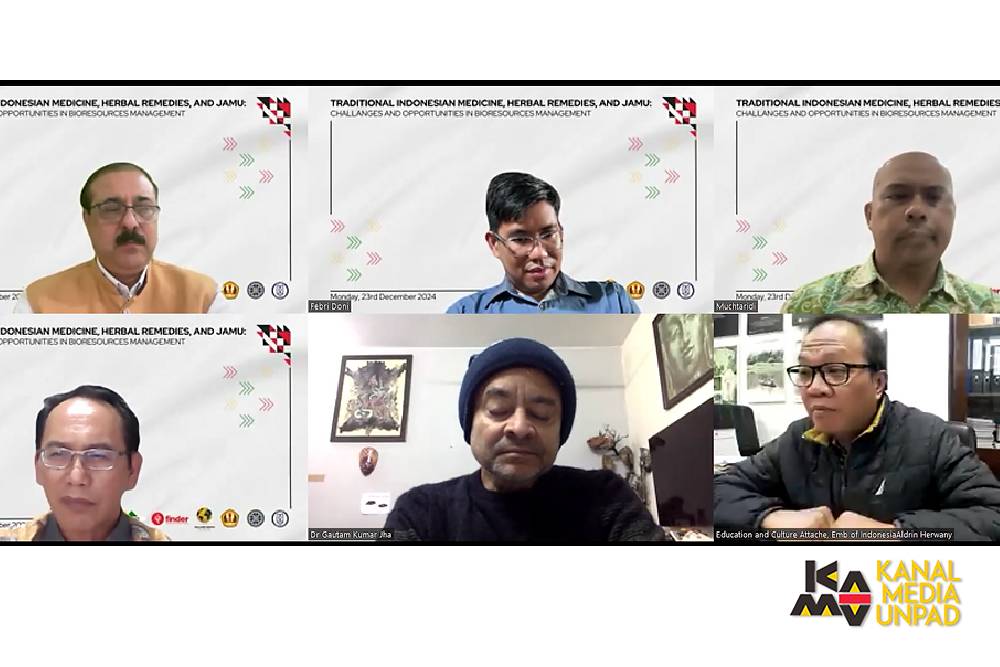
[Unpad Media Channel] Universitas Padjadjaran, through the Indonesia-India Bioresources Consortium (IIBC), holds a webinar titled “Traditional Indonesian Medicine, Herbal Remedies, and Jamu: Challenges and Opportunities in Bioresources Management”. The online event, conducts on Monday, December 23rd, 2024, serves as a crucial moment to strengthen cooperation in managing bioresources between Indonesia and India.
In his opening remarks, Prof. Dr. Eng. I Made Joni, the Chairman of IIBC, emphasized the need for cross-sector synergy to address the challenges of sustainable bioresource management. He said that the event not only introduced Indonesian traditional medicine, such as jamu, but also served as a platform to discuss the potential and challenges in managing tradition-based bioresources.
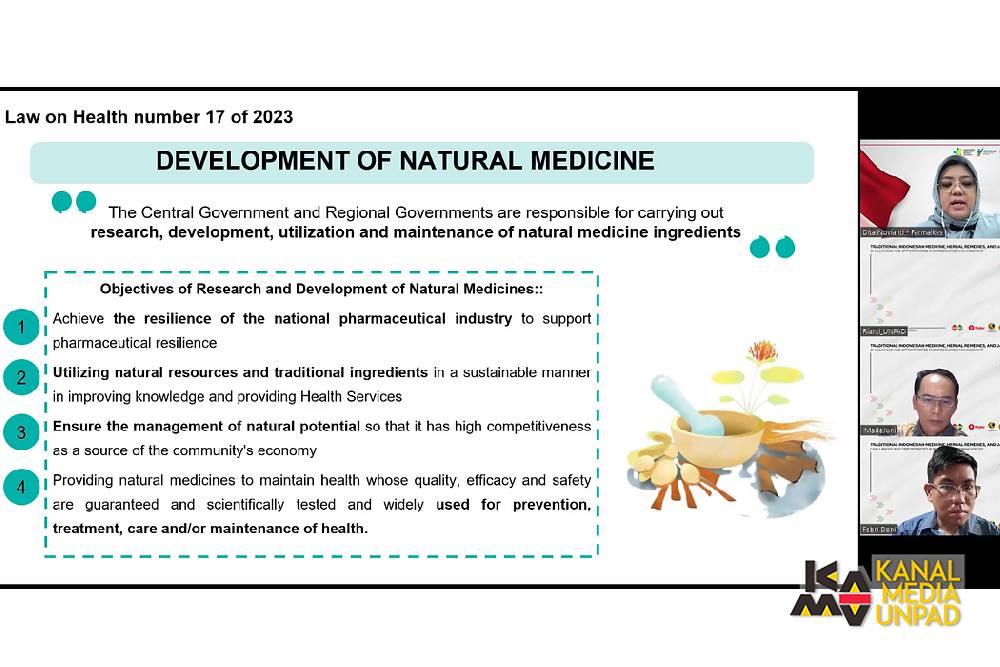
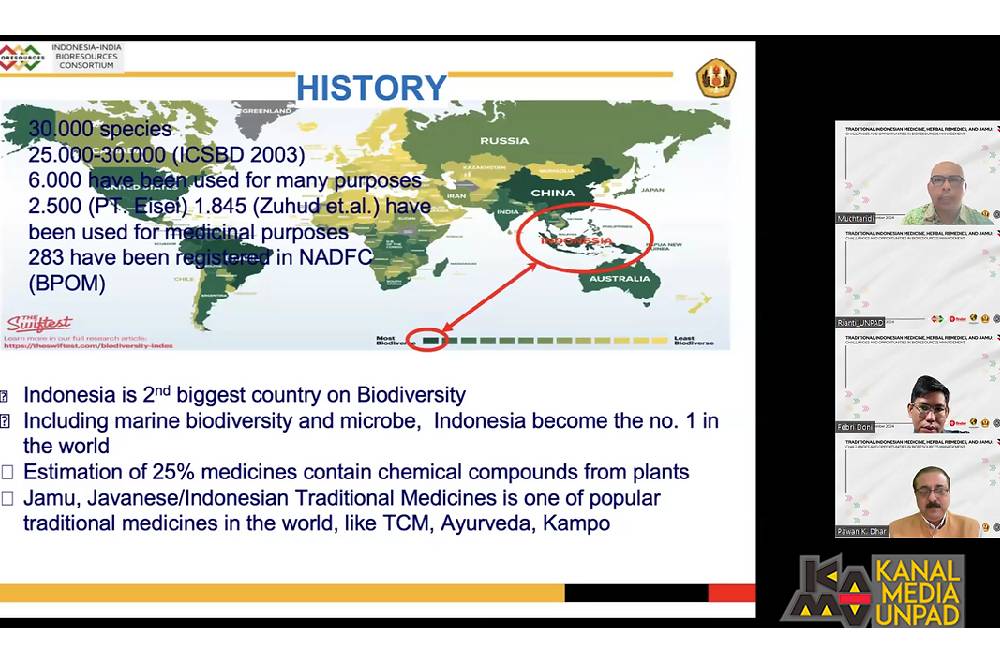
Dita Novianti Sugandi, S.Si., Apt., M.M., the Director of Pharmaceutical Production and Distribution at Indonesia’s Ministry of Health, delivered the first session. She highlighted the importance of regulations supporting the development of herbal medicines based on biodiversity. Jamu, as a cultural heritage, needs to be preserved and scientifically validated to compete globally. Indonesia’s biodiversity, with over 30,000 plant species, represents a significant potential for developing natural medicines.
In the following session, Dr. rer. nat. apt. Ni Putu Ariantari from Universitas Udayana Bali presented her research on endophytic fungi that produce bioactive compounds for developing antibiotics and cancer drugs. Her discoveries strengthen Indonesia’s position in modern pharmaceutical research.
Furthermore, Prof. Dr. Pawan K. Dhar, from the Center for Synthetic Biology & Biomanufacturing CVJ Kochi, India, emphasized the importance of integrating traditional medicine, such as Ayurveda and Jamu, with modern technologies like genomics and bioinformatics. He also proposed establishing a global center of excellence for herbal medicine to enhance the competitiveness of tradition-based products.
Prof. apt. Muchtaridi, Ph.D., from Unpad, introduced strategies like the ASEAN Natural Materials database to support research on bioactive compounds and computer-aided drug design. Collaborations with countries such as Malaysia, Thailand, and Japan are expected to accelerate the development of Jamu into international phytopharmaceutical products.
In a panel discussion moderated by Febri Doni, Ph.D., from Unpad and Cornell University, USA, experts agreed that modern technology, strong regulations, and local community empowerment are key to supporting sustainable bioresource management.
This webinar demonstrates that cross-sector collaboration between Indonesia and India can drive tradition-based innovation with global competitiveness. It serves as a strategic first step in building a robust research and development ecosystem for bioresources while preserving cultural heritage and biodiversity for future generations.*