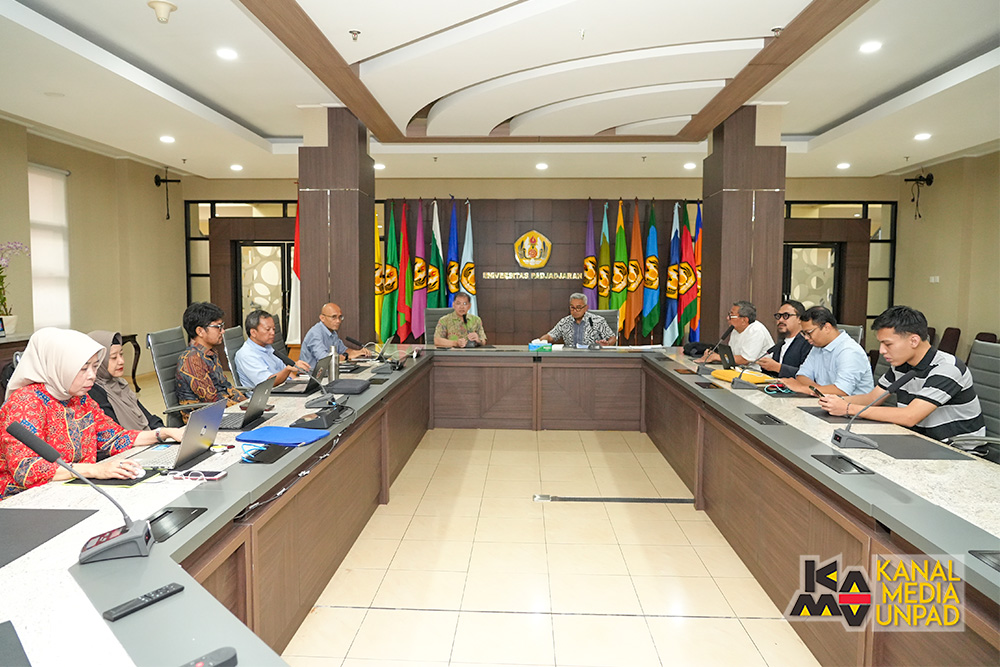
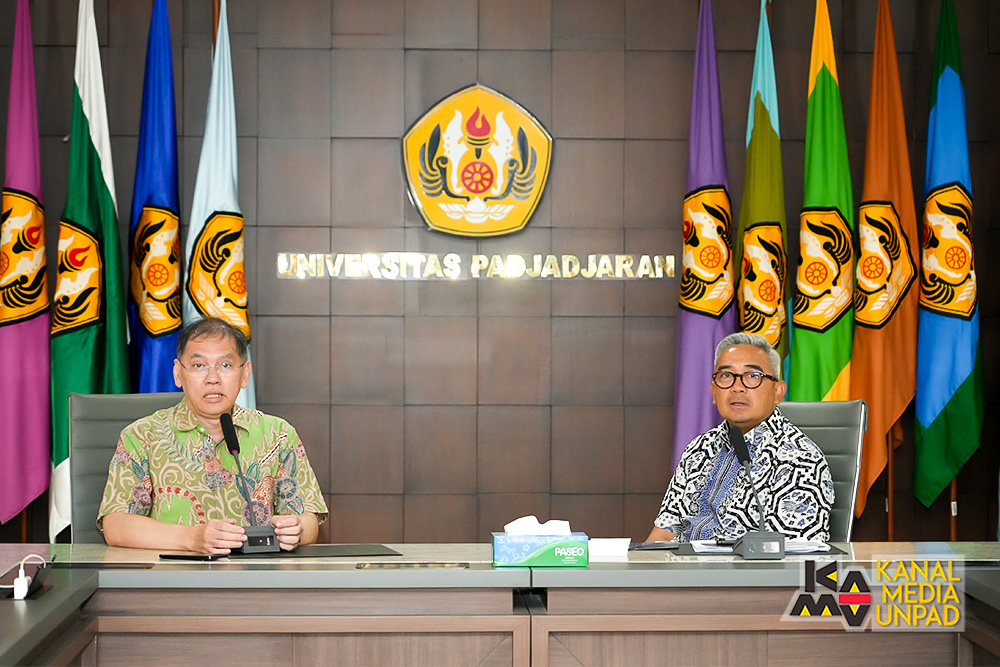
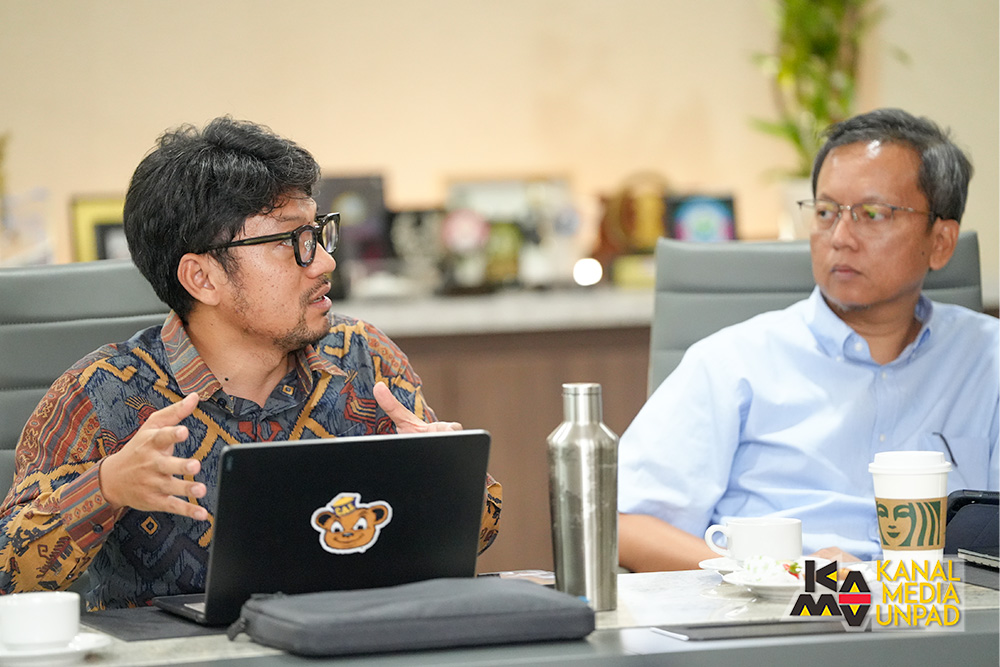
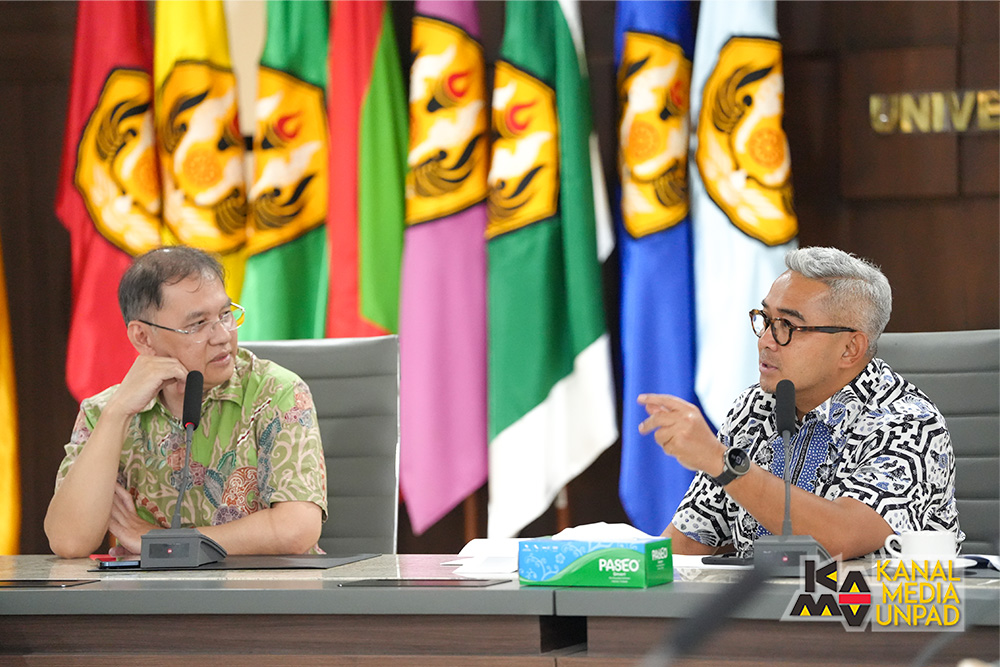
[Unpad Media Channel] The newly elected Mayor of Bandung visits Universitas Padjadjaran to discuss strategies for waste management and reduction in Bandung. The discussion, that is held on Wednesday, February 12, 2025, at the Executive Lounge, Unpad Rectorate Building, Jl. Dipati Ukur No. 35, Bandung, concluds with an agreement between the elected Mayor and Unpad to integrate technology and social engineering approaches in tackling waste issues.
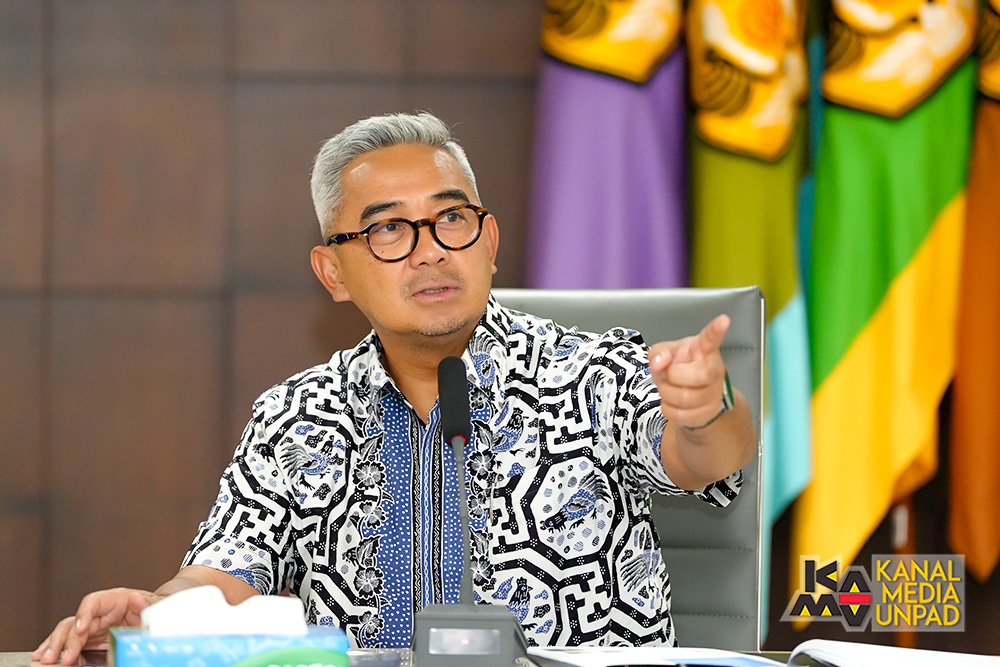
“We must consider sociological, legal, psychological aspects, and ultimately, the economic utilization of waste itself,” said Muhammad Farhan, the elected Mayor of Bandung, who is also an alumni of Unpad.
The Waste-Free Zone (KBS) program, which has already been implemented in several neighborhood units (RW), is part of the effort to achieve more sustainable waste management. Currently, there are 413 KBS spread across Bandung. If the program succeeds, waste reduction at the source will simplify waste management and utilization downstream, ultimately creating a cleaner and more sustainable environment.
Unpad has introduced a new concept in waste management by categorizing waste into three types, such as food waste, recyclable waste, and residual waste. The university also involves the community in waste management through education, training, and Internet of Things (IoT) technology to monitor and evaluate waste management in different areas.
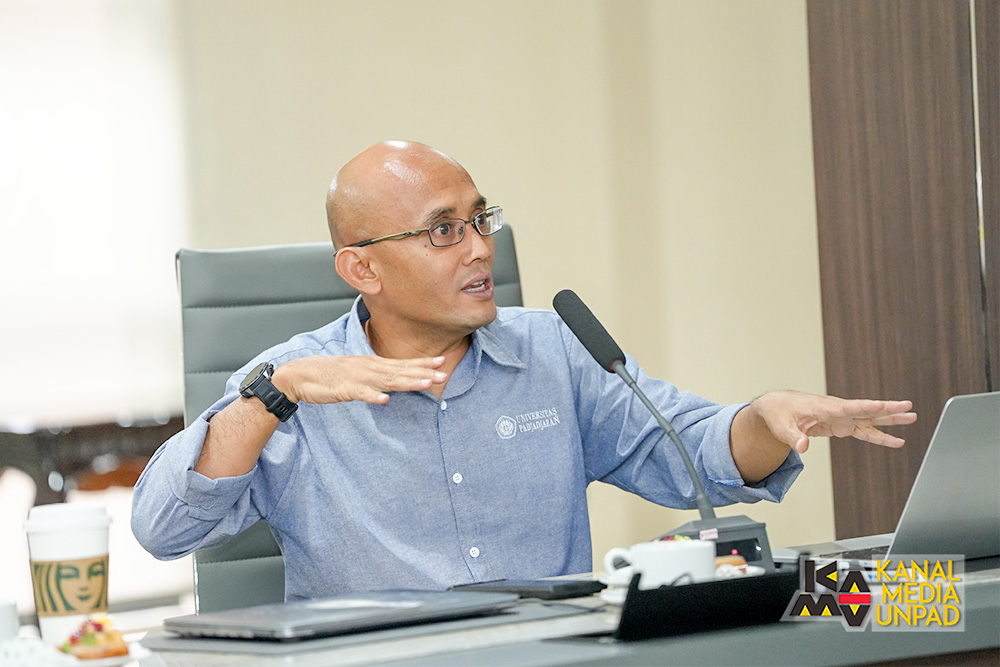
“At Unpad, various research initiatives related to waste management have been developed using multiple approaches. One of them is a dynamic systems model, which has been applied in research development,” said Prof. Dr. Tomy Perdana, S.P., M.M., Director of Alumni Cooperation and Partnerships at Unpad.
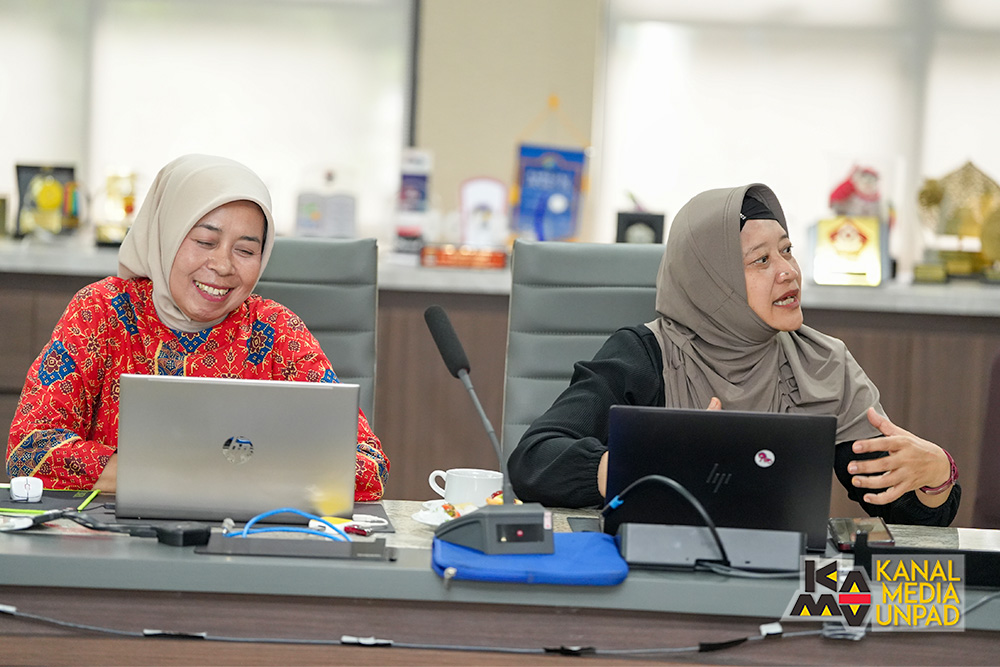
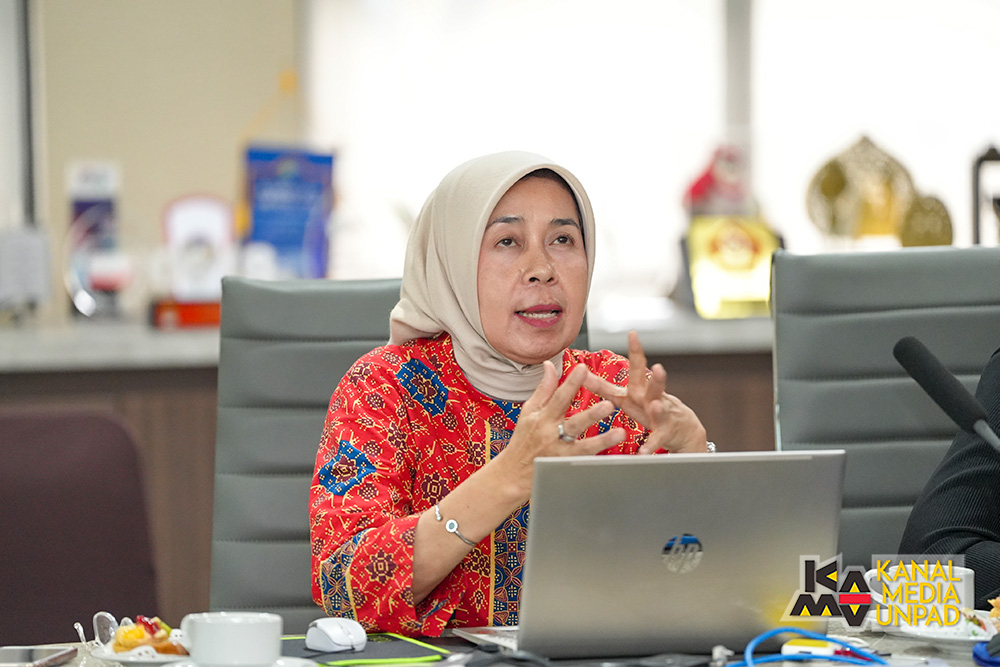
From an environmental communication perspective, Dr. Herlina Agustin, S.Sos., M.T., an environmental communication researcher and professor in Unpad’s Journalism study program, has mapped the key issues in waste management, particularly focusing on behavioral change. She has initiated several programs, including mentorship and the creation of a female mascot as a symbol of waste reduction efforts, highlighting the crucial role of housewives in waste management.
“Active government involvement and community participation are crucial in waste management, as regulated by law. The law clearly states that waste management must involve public participation to achieve optimal results,” said Dr. Dra. Bintarsih Sekarningrum, M.Si., Head of the Master’s Program in Sociology at Unpad’s Faculty of Social and Political Sciences.
Furthermore, the Rector of Unpad emphasized that in supporting waste management in Bandung, Unpad is committed to educating the public on behavioral change in waste handling. Through this process, the Government of Bandung City can develop a detailed roadmap to implement more efficient steps in addressing future waste management challenges.
“We will provide mentorship, and the behavioral change process has already shown significant results. Changing behavior doesn’t happen overnight—it takes time. However, through this process, the Government of Bandung City can establish a clear roadmap to implement effective measures,” said Prof. Arief S. Kartasasmita, Rector of Unpad.
The meeting was also attended by FEB Unpad lecturer Rizky Ramadhan, S.E., M.I.L., Ph.D., as well as a team from the Government of Bandung City.
The collaboration between Unpad and the Government of Bandung City. demonstrates a strong commitment to delivering innovative waste management solutions. By integrating technology, social engineering, and active community participation, the waste management program is expected to run more effectively and sustainably, bringing broad positive impacts for the people of Bandung.