Reported by Ismail Cahya Putra
[Unpad Media Channel] Two Professors from Faculty of Agriculture at Universitas Padjadjaran delivered their academic oration on the Appointment Ceremony and Academic Oration for the Professorship which was held at Grha Sanusi Hardjadinata Unpad Iwa Koesoemasoemantri, Bandung, Wednesday (7/2/2024).
The two appointed Professors are Prof. Dr. Yayan Sumekar, S.P., M.P. in the field of herbicide persistence and Prof. Dr. rer. nat Ir. Suseno Amien in the field of In Vitro Plant Breeding.
Prof. Yayan delivers his academic oration titled “The Persistence of Herbicides in Soil Amended with Organic Materials, and Its Effects on Weed Suppression and Crop Yield Optimization”. In his academic oration, Prof. Yayan explains the role of herbicides in the weed control of agriculture cultivation.
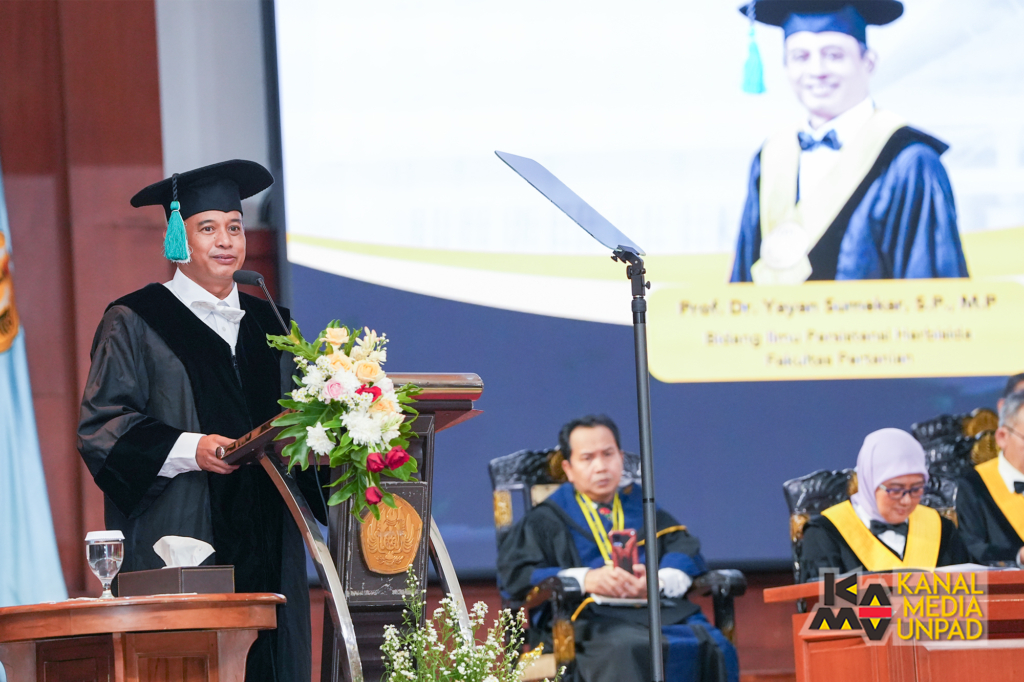
According to Prof. Yayan, the usage of herbicides has various advantages over mechanical methods. Weeds can be immediately controlled, it is more effective for wide areas, and it can help avoid erosion and root damage.
“Herbicide can control weeds that are difficult to remove by hand, solve labour issues in terms of time required, improve maintenance quality, and maximize crop production,” he said.
Even though it is effective in controlling weeds, one of the problems faced in the usage of herbicide is the persistence of herbicide in the soil. Short-persistence herbicides will not be effective against weeds. However, herbicides that persist for too long have a risk of poisoning the following season crops.
From the conducted research, Prof. Yayan compares the research results from three countries. He said that herbicide persistence in Java island was safer than soil test results from Northern China and India.
The soil treated with herbicides on Java Island does not show any soil toxicity residue after 83 days, which is faster than the research findings in India, where the residue takes 90 days to dissipate, and the soil research in Northern China, which still shows toxicity after 250 days.
“If the farmer uses this herbicide, especially those in Java Island, will be relatively safe from environmental pollution, aside from it can kill weeds, with the requirement that its application must be appropriate, executed properly, and the dosage must be correct,” said Prof. Yayan.
Furthermore, Prof. Suseno delivers his academic oration titled “Biotechnology Application on Plant Breeding Program for Food Security in Indonesia”. In his academic oration, he explains the importance of biotechnology innovation in maintaining food security and the application of the innovation.
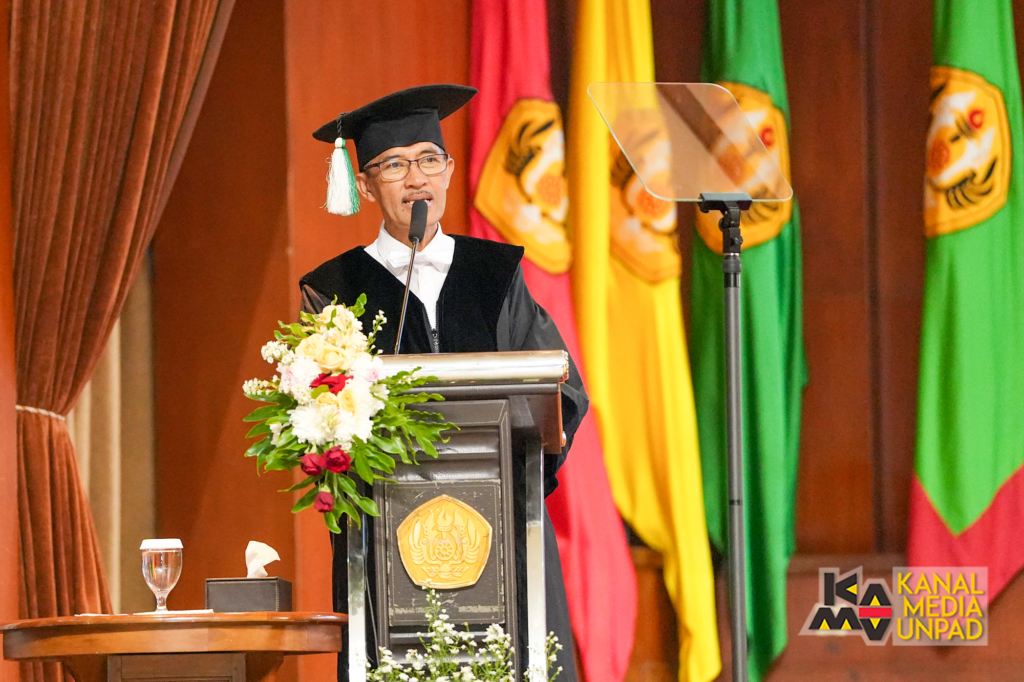
“To enhance food security in Indonesia, the development of cultivation technology is a significant step to create conducive conditions for plants,” said Prof. Suseno.
The application of biotechnology is a step toward supporting food security through plant breeding. In the research conducted by Prof. Suseno himself, genetic engineering in corn produces corn with customisable amino acid content to fulfil individual needs.
Prof. Suseno emphasizes the significance of encouragement for plant breeding programs as has been done before. The results of plant breeding programs need to be examined properly. (arm/SA)*