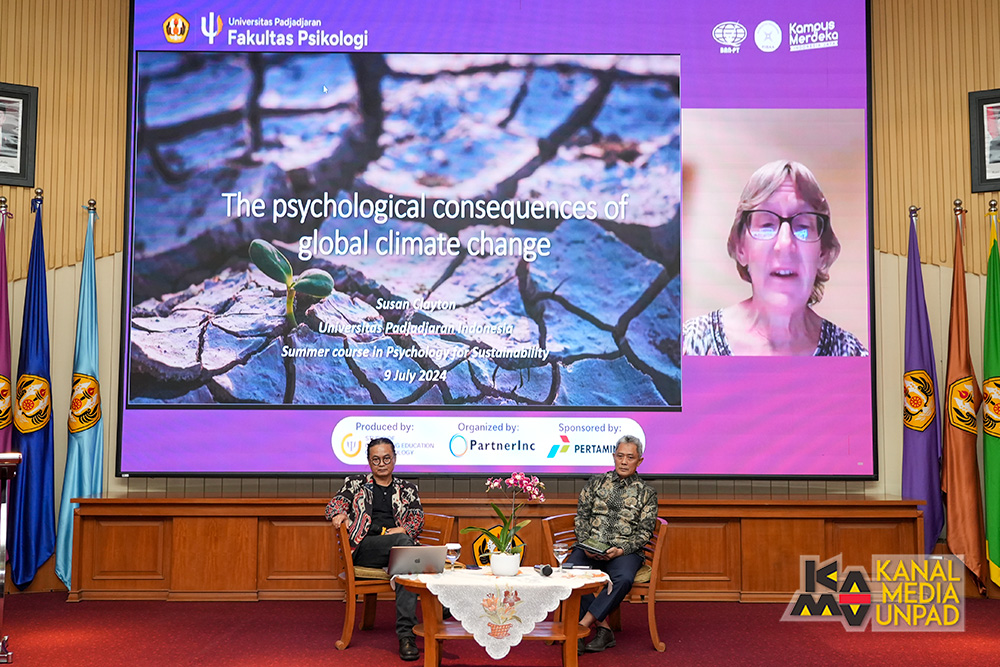
[Unpad Media Channel] The Director General of Environmental Pollution and Degradation Control lr. Sigit Reliantoro, M.Sc. said that Psychology plays a role in promoting sustainable behavior among society, especially the younger generation.
This was delivered by Sigit, who was present representing the Minister of Environment and Forestry of the Republic of Indonesia, Prof. Dr. Ir. Siti Nurbaya Bakar, M.Sc. in the Public Lecture titled “A Human-Nature (Dis)Connection in the Anthropocene Epoch” at Bale Sawala, Unpad Rectorate Building, Jatinangor, Tuesday (9/7/2024).
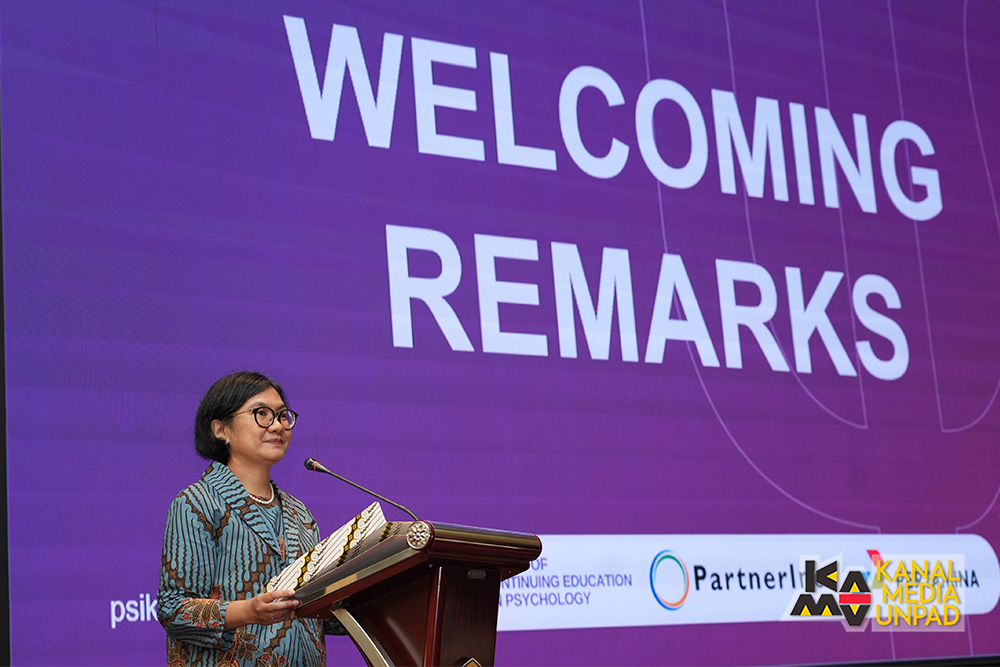
The public lecture is a part of the series of events of the Summer Course on Psychology for Sustainability that is held by the Faculty of Psychology at Universitas Padjadjaran with the Studio of Continuing Education on Psychology Unpad.
Sigit said that there are four key psychological factors influencing urban pro-environmental behavior in urban areas, such as positive attitudes toward the environment, understanding of ecological issues and their impacts, increased environmental awareness through education, and enhanced environmental self-confidence in their ability to make a difference.
According to Sigit, those behaviour can be achieved through environmental citizenship. “It emphasizes the active engagement of citizens in pursuit of sustainability, underscoring the importance of collective efforts in mitigating our environmental challenges,” he explained.
Barriers to sustainability can also emerge through NCET (Negative Climate Change Emotions and Thoughts) which come the from the fear triggered by negative environmental information. Addressing this matter, it requires the presence of an optimistic narrative in public discourse and encouraging proactive engagement in climate optimism.
“It promotes a realistic understanding of current challenges while highlighting effective solutions and social momentum to prevent further environmental degradation,” he said.
For the last decades, the Minister of Environment and Forestry of the Republic of Indonesia has been committed to enhancing the knowledge of the young generation in Indonesia regarding sustainability issues, such as through Green Leadership Indonesia (GLI), Adiwiyata School Program, and the PROPER Program.
Furthermore, the public lecture continues with the presentation by the Professor of Psychology and Environmental Studies at the College of Wooster Susan Clayton, Ph.D titled “The Psychological Consequences of Global Climate Change”. Then, a presentation by the Director General of Culture Ministry of Education, Culture, Research, and Technology Republic of Indonesia Hilmar Farid, B.A., M.A., Ph.D. titled “Developing Social Cultural Ecological Worldview for Sustainable Behavior: The Anthropocene and Ecological Principles”.
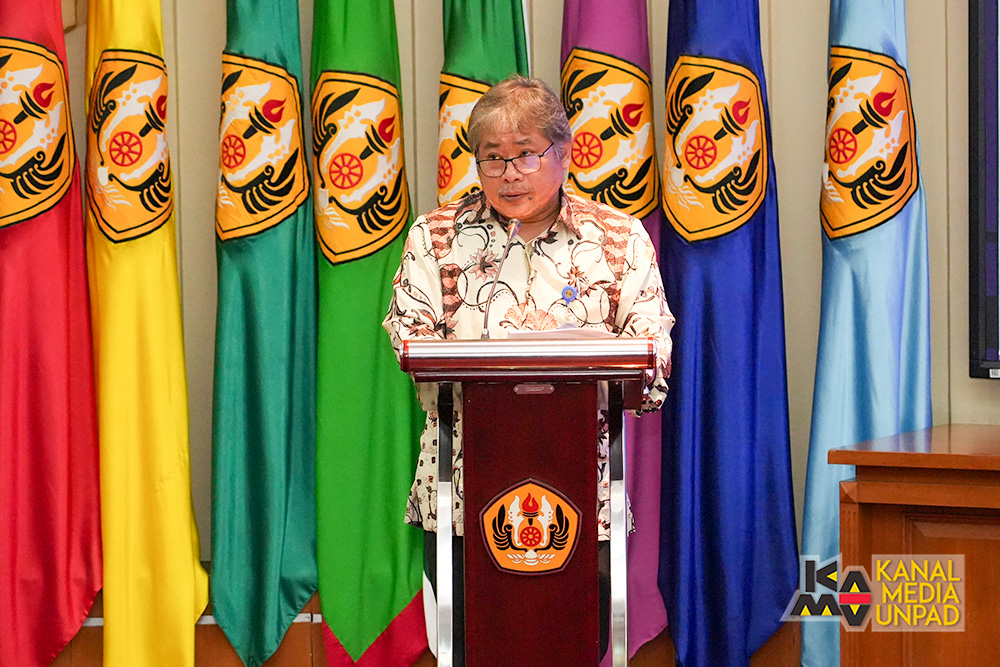
At the beginning of the event, the Vice-Rector for Research and Innovation Inovasi Prof. Dr. Ir. Hendarmawan, M.Sc. said the government, academics, and society have shown their concern for climate change. Climate change creates difficulties and challenges that are also faced by the entire world.
“Therefore, all institutions continue to program of climate resilient many investigations and innovation projects related with the technology, IT and all institutions continue to program of all climate resilient,” he said.
Prof. Hendarmawan mentioned that this issue must be addressed through multidisciplinary approaches, including Psychology. “I am sure that touching the main features of psychology and collective practice will give us much better results,” he said. (art/SA)*