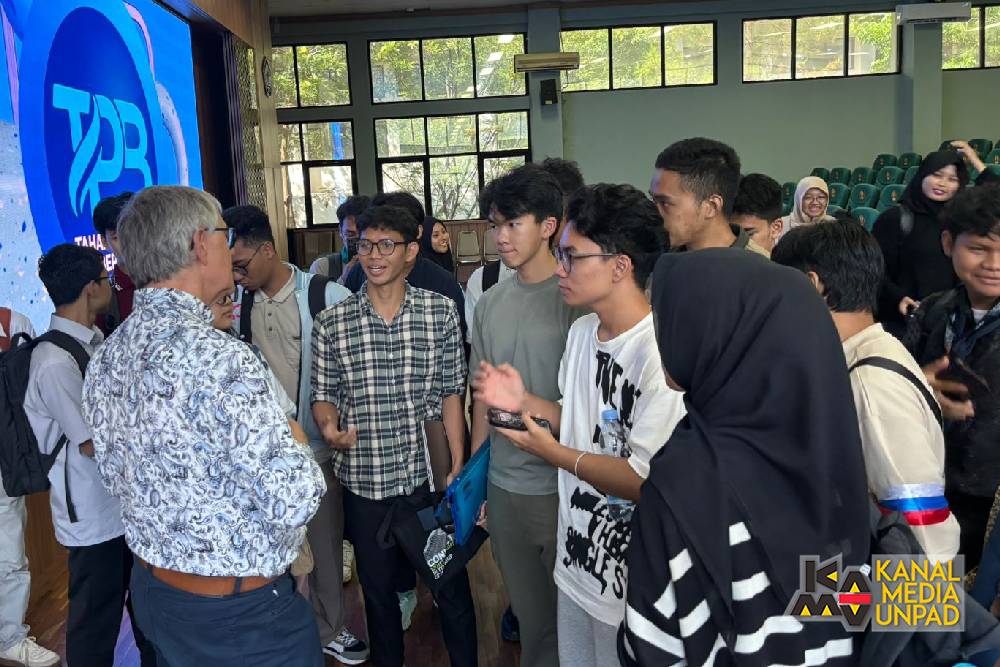
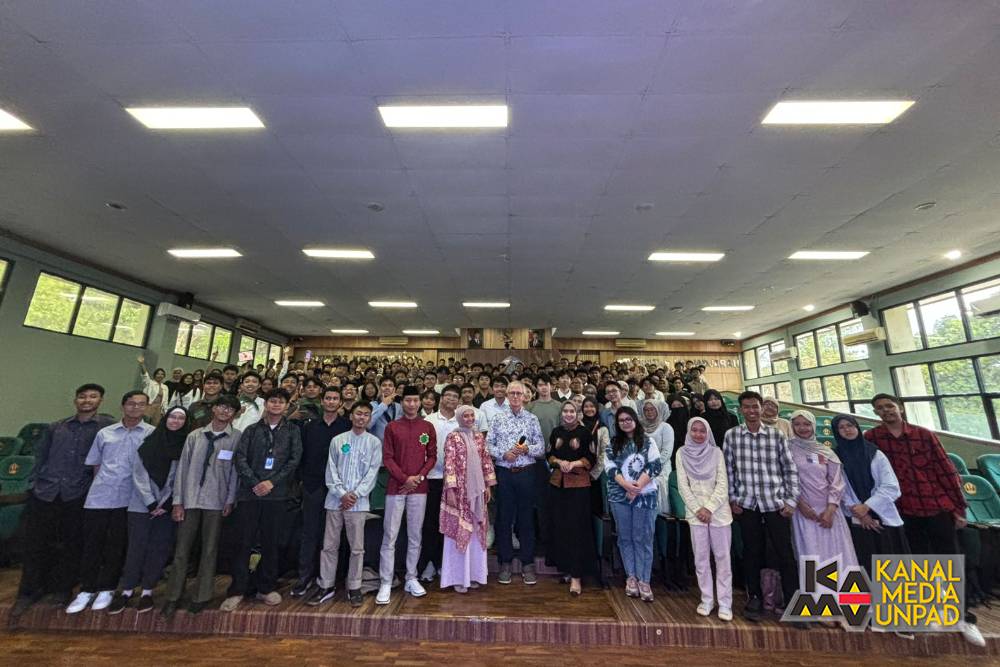
[Unpad Media Channel] To support the United Nations’ Sustainable Development Goals (SDGs), Universitas Padjadjaran held a General Lecture for the Preparatory Stage (TPB) course Olah Kreativitas dan Kewirausahaan (OKK/Creativity and Entrepreneurship) under the theme “Education for Sustainable Development (ESD)”.
The keynote speaker was Prof. Dr. Peter Mayer, Professor of Economics and International Economics from the University of Applied Sciences Osnabrück, Germany. The lecture, attended by more than 9,700 new students, was conducted in a hybrid format at Unpad’s Faculty of Medicine Auditorium and live-streamed on Unpad’s official YouTube channel on Friday, September 12th, 2025.
“SDGs are a comprehensive vision that integrates social, economic, and environmental issues. They are not just about poverty or health, but about a long-term picture of the world we want to build together,” explained Prof. Mayer.
He emphasized that achieving the SDGs is not solely the responsibility of governments. “While governments are natural actors, private corporations and society also play crucial roles. Don’t wait—sustainable development is a task for all of us,” he stressed.
Prof. Mayer encouraged Unpad students to align their studies and future professional contributions with the SDGs. “If you study medicine, contribute to strengthening the healthcare system. If you study economics, create fairer economic policies. Every discipline can make a difference,” he said.
Highlighting the importance of cross-border collaboration, he also urged students to engage in global discussions. He shared examples from his encounters with Malaysian and German students who exchanged perspectives on waste management and differing social conditions. “When you meet international peers, start a dialogue. You are the future, and through these interactions, we can find shared solutions,” he remarked.
In his lecture, Prof. Mayer introduced the 17 SDGs, adopted by the United Nations and targeted for achievement by 2030. These include: No Poverty; Zero Hunger; Good Health and Well-being; Quality Education; Gender Equality; Clean Water and Sanitation; Affordable and Clean Energy; Decent Work and Economic Growth; Industry, Innovation, and Infrastructure; Reduced Inequalities; Sustainable Cities and Communities; Responsible Consumption and Production; Climate Action; Life Below Water; Life on Land; Peace, Justice, and Strong Institutions; and Partnerships for the Goals.
Closing his address, Prof. Mayer expressed optimism about Indonesia’s trajectory. “I first came to Indonesia in 1997. From my perspective, although challenges remain as in any other country, Indonesia is on the right track,” he concluded. (Reporter: Jericho Masyiakh Metiary)*