[Unpad.ac.id, 18/04/2016] The development process of urbanization and modernization has triggered serious implications for environment. Various dangerous substances are polluting the environment. The seriousness of the government in controlling environmental pollution is still questionable.
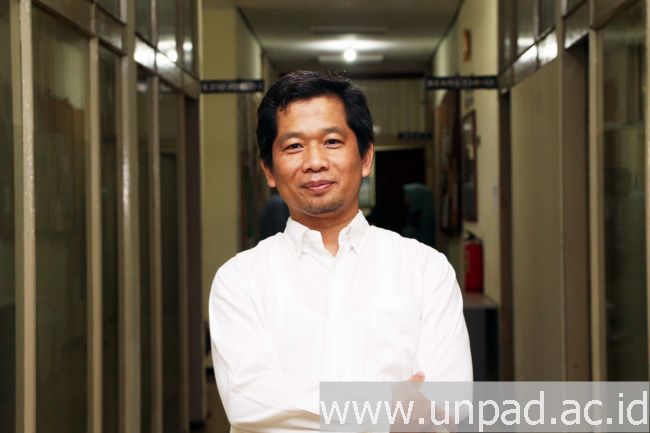
“Various human activities today has produced many foreign substances that are difficult to be degraded by nature,” said lecturer of Department of Biological Science, Universitas Padjadjaran Sunardi, PhD. Lecturer who studied Environmental Toxicology explained that various foreign substances are produced from various sources such as exhaust process, transportation, agricultural activities, and industrial waste not in accordance with EIA recommendations.
Foreign substance or xenobiotic has diverse spectrum, ranging from heavy metals such as mercury, arsenic, cadmium, lead, potassium, and carbon monoxide, as well as substances such as pesticides, organochlorines, and organophosphate, carbamate, or high level of carbon monoxide phosphate. Shall these toxins accumulate in the air the effect will be very dangerous for the organisms, including humans, survival.
“If these compounds polluted the, it will accumulate in fishes; if the fishes are eaten by humans, these contaminants become accumulated in human body. The interference will be very diverse, ranging from cancer, mental retardation, reproductive system disorders, damage of liver and and kidney function, even lethal, “said this lecturer who was born in Sukoharjo, May 30, 1969.
Meanwhile, emissions of industrial activities and transport will increase the concentration of greenhouse gases (GHGs) in atmosphere layer. This condition causes a rise in atmospheric temperature and phenomenon of global warming, which caused climate anomalies.
Related to environmental pollution, alumni of Saitama University Japan Doctoral Program have conducted various studies. Two of his studies have been conducted data collection on pollution level in Citarum River in West Java, as well as to test contaminants in ground water of Ciwalengke, Majalaya Regency.
In the Citarum River, Sunardi found that the water has been heavily polluted. Approximately 40% of pollution came from industrial waste, while the rest came from domestic waste. Although the burden of industrial waste was less significant, but types of substances that were disposed of dangers has far exceeded domestic waste.
From the upstream, Citarum river water was polluted by pesticide residues, industrial and farm waste. According to Sunardi, this has also caused fishes biodiversity in Citarum River, reaching critical level. In the upstream area, no more than ten species of fish are able to survive, such as: Keting, Betok, and Sapu-sapu, those economically have low value. While fish farming in Saguling and Cirata of Citarum River has also been contaminated with heavy metals.
In addition to water pollution, Citarum River is also threatened by deforestation in the upstream area. Water absorption land is diminished as a result of land conversion activities. These conditions have created a reduced landscape ability to control water overflowing the river when rainy season arrived.
Meanwhile in research in Ciwalengke Majalaya area, Sunardi found that the quality of ground water in the area has been contaminated with heavy metals. The pollution was caused by industrial waste disposal activities in the area, especially textiles industry that has not been properly controlled.
“The textile industry dumped liquid waste containing heavy metals, and discharged them into the river without being processed properly. The waste then seeped into groundwater and water wells, and then are used for community activities. This is dangerous for the community continuous consumption, “said Chief Master program in Environmental Sciences Unpad.
The effects of this polluted water, said Sunardi, could cause various health problems, such as neurological disorders, cancer, reproductive problems, failure in liver and kidney function, and mental retardation in children. Unfortunately this effect would only appear within a dozen or decades ahead.
Sunardi said that allegedly polluted groundwater conditions are not only recurring in Ciwalengke, but also in other industrial estates.
“If a complex in the industrial area is located near a settlements, waste that is not treated properly will have the same risk as it was in Ciwalengke,” he said.
Environment Degradation Rate
So could polluted environment be remediated? Theoretically and practically, remediation of polluted environment could be done. However, Sunardi was not sure if this recovery process could be run quickly.
“The pace of environmental degradation was much faster and dramatically compared with the findings of the technology to fix it. So the best approach is control, “said Sunardi.
What Sunardi meant by control was to control any industrial activity waste. Industry should be committed and able to process its waste properly. If the dumped waste contained a variety of heavy metals toxic compound, they are obligated to perform treatment plant, in order to prevent harmful substances from leaking and damaging the ecosystem.
“Same with the community. If you consume goods and food, you should not discarded the trash so carelessly,” he added.
The government also has full authority to oversee industry activities. If an industry violated law in disposing of hazardous waste, then government must shut it down. Quality standards of waste enforcement must be conducted.
“We can control impact of industry through technology, while government could control through rules. If the government does not have a strong political will, all the technology to control pollution still would not be able to provide a solution,” he concluded.*
Reported by Arief Maulana / eh