[Unpad.ac.id, 27/05/2016] In order to gather the views of academics, students and the general public re Guidelines for Development Planning, People’s Consultative Assembly of Republic of Indonesia (MPR RI) held discussion on nationality, “MPR Goes to Campus” with theme of “Guidelines of State Policy” at Graha Sanusi Hardjadinata University Padjadjaran, Jl. Dipati Ukur 35 Bandung, Friday (27/05).
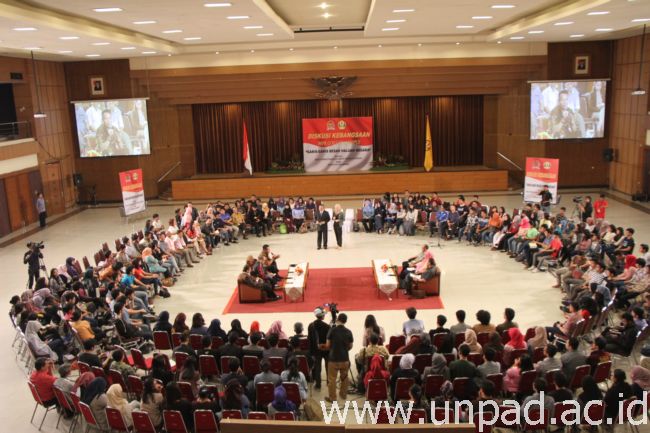
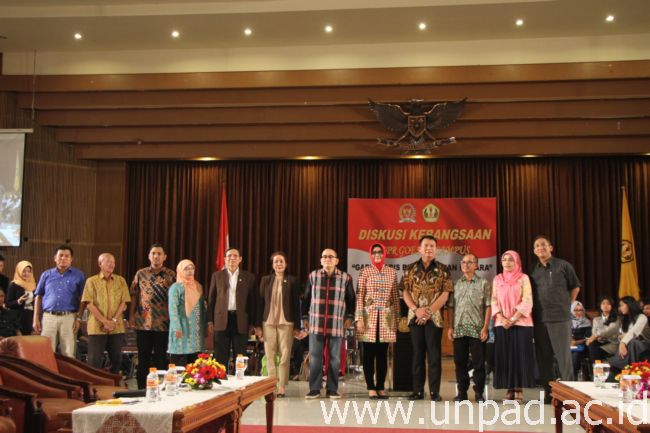
Attending as speakers in this discussion were Unpad academics, Prof. Dr. Dede Mariana, MSi., Dra. Mudiyati Rahmatunnisa, MA., PhD., and Dr. Indra Perwira, SH., MH., also members of MPR RI, Tb. Hasanuddin from Fraction of PDI Perjuangan, Ruhut Poltak Sitompul of Fraction Partai Demokrat, and Ahmad Zacky Siradj of Fraction Partai Golkar. Head of Assessment Secretary General Bureau MPR RI, Drs. Yana Indrawan, MSi was also in attendance.
GBHN is the guidelines implementation for Indonesia in the New Order era set by the Assembly for 5 years period. After the Amendment of the 1945 Constitution 1945 changed the role of the Assembly and the President, the guidelines did not apply any longer. Then, Law No. 25/2004 on National Development Planning System re Long Term Development Plan (RPJP) in 20 years term and the Medium Term Development Plan (Plan) in years term was implemented.
According to Mudiyati, PhD., the Guidelines were not the only documents of development planning in Indonesia. Formerly in the Sukarno era there were planning National Development Plan, in the Suharto era there were guidelines, then there was National Development Program (Propenas) in 2000-2004, and now it is called National RPJP.
“This development planning document is very strategic, regardless of its name. This document will be the source of the constitutional mandate, and everything underneath must stem from it. The problem is that if there is a centralized document, regional autonomy will become absurd. But if it is not synergized it will also be unfocused, “said Mudiyati, PhD.
Meanwhile Prof. Dede Mariana said that bureaucracy is always working on the development planning. Yet if the politicians in office did not turn it into policy, it will be unused.
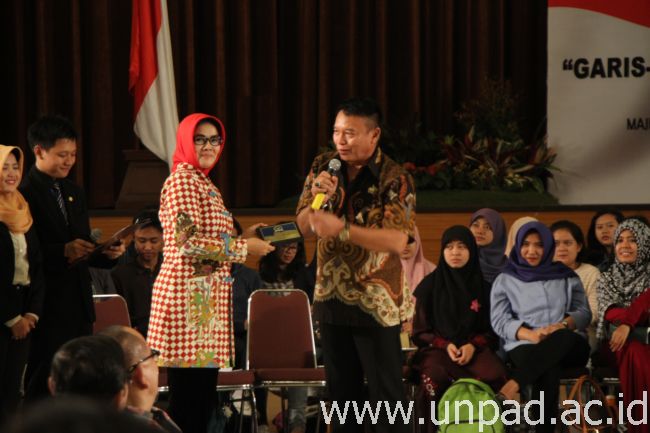
 Dr. Indra Perwira asserted that the key issue was not whether the guidelines need to be reinstated, but more on how we maintain the consistency of development plans that have been defined.
“We as the state officials are given the responsibility to provide public services and build public welfare. Therefore the country needs guidance and direction in order to build prosperity. First, the investment’s direction, previously the GBHN. Then the location or the direction of the National Spatial Plan, “said Dr. Indra.
The members of MPR RI in the discussion said that they were grateful for the suggestions and opinions of academics. Aside from Universitas Padjadjaran, they have traveled to various campuses in Indonesia to obtain input regarding these guidelines. Ruhut Sitompul, Achmad Zacky Siradj, and Tb. Hasanuddin were confident of the policy or guidelines’ strategic role, and to maintain development consistency so that it would not shift only because regime change.
“At the moment, we are clueless of national development plans. Every president only refers to his promise to the constituents at the time of the election. It did not always have connection with the existing development plan. Now people are surprised with the emergence of bullet train and maritime axis. Then if the maritime axis concept is commended, would the next president continue? If not, it would be unsustainable, “said Tb. Hasanuddin who is also Chairman of PDI-P, West Java.*
Reported by Erman