[Unpad.ac.id, 21/06/2016] Cornhusk waste could be turned into several high value products. This was the activity of four Universitas Padjadjaran students, Iip Hanifah (Physic 2014), Resti Ayu Widyarini (Physic 2014), M. Rizky Ridwansyah (Chemistery 2014), dan Yoga Jati Pratama (Food Technology 2014), through the business unit they have initiated since last year, “Ketapel Kujang Motif Jawa Barat”.
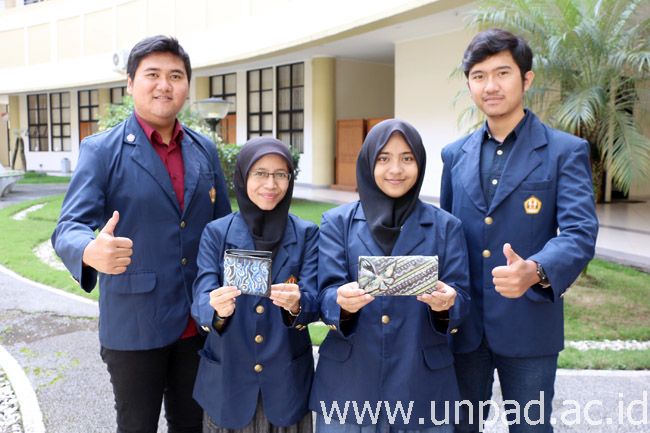
Ketapel Kujang is is an abbreviation of Crafts with Cornhusk Waste Utilization. The hallmark of their products is their typical West Java batik motif on each product with the airbrush technique.
The cornhusk waste was gathered from subdistrict Tanjungsari, Sumedang regency. At first, they were concerned to see the amount of cornhusks waste. They finally decided to process the waste into more useful products such as purses, bags, and decorative lighting.
“First, the material for the product is easily obtainable. Secondly, we are turning waste into something more useful, “said Iip during the interview at Unpad PR section, Rectorate Building Jatinangor, Tuesday (21/06).
They said that the corn waste treatment process is not an easy thing to do. After going through the process of research and development, they finally discovered a technique that fits in cornhusk waste treatment process. Cornhusk waste treatment process is also now in the process of filing of Intellectual Property Rights.
“During our first time, the information about the processing of corn husk is very little and limited,” said Yoga.
To start producing from the processing of cornhusk waste, there are some processes including boiling and making pattern. After the pattern is finished, the next process is to sew and add batik patterns done by tailors and airbrush artist.
Adding West Java batik pattern is also a mean to introduce these pattern to their customers as a venue for cultural preservation. “Many of the young generation in Indonesia do not know their own culture. Although they lived in West Java, they do not know exactly what West Java batik is like, “said Iip.
Through Ketapel Kujang, Iip and the team wanted to bring more benefits to farmers of corn by utilizing the waste. In addition, they also want to make known the importance of managing the “waste” as the environmental movement. Besides being able to spread all over Indonesia, they also hope these products can be marketed internationally.
“Hopefully, the buyer will later realize that the waste could also be turned into producet,” said Rizky.*
Reported by Artanti Hendriyana / eh