[unpad.ac.id, 25/1/2021] Water scarcity is a pressing concern in many regions in the world. Affecting more than the rise of health and food security issues, water scarcity is also predicted to affect the rise of gender-based violence.
However, this phenomenon has not been extensively studied as of yet. Research into the relationship between water scarcity and violence towards women is still minimal. This is true even though women naturally live very close to water. Once water becomes scarce, women are the most impacted people and are more susceptible to gender-based violence.
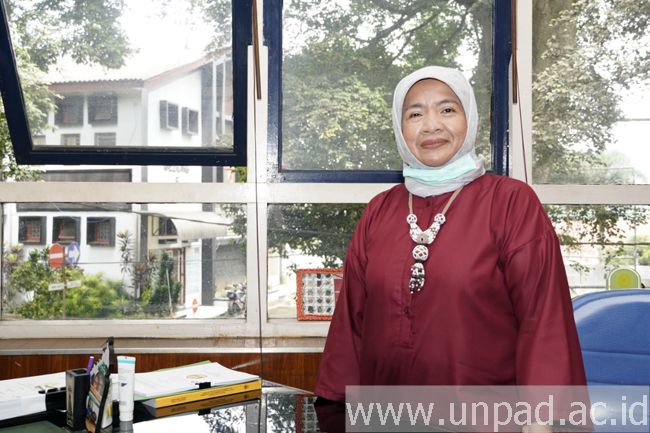
The subject compelled a professor of Social Welfare at Unpad Faculty of Social and Political Science (FISIP), Binahayati Rusyidi, MSW, PhD, to research the connection between water scarcity and violence against women.
Alongside a multinational and interdisciplinary team of researchers consisting of Stroma Cole, Ph.D. from University of the West of England/ Westminster University, Gabriela Salmon, Ph.D. from Pontificia Universidad Catolica del Peru, and Paula Tallman, Ph.D. from the University of Massachusetts, the research succeeded in getting awarded a grant from the British Academy through a competition called International Interdisciplinary Research Grant.
“We are observing how, with the spread of water scarcity, women will be impacted greatly, thus we need to research it,” said the professor, who usually goes by Titi, when interviewed by the Public Communications Office in her office.
Titi explained that, socially, gender roles often make women closer to water. These roles include looking after the house, the children, and reproductive needs. Furthermore, in many cultures, women are given the task of gathering water as a reflection of their role as mothers and wifes who take care of the household.
When water is hard to come by, and the responsibility of gathering water falls to the woman, it may gradually trigger conflict. Whether they want to or not, women are encouraged to search for water in far-off and barely reachable locations. Aside from that, the locations containing water are not guaranteed to be safe.
A lot of reports, Titi continued, show women being susceptible to gender-based violence when gathering water. Not only physical, the violence suffered also ranges from psychological, emotional, to sexual.
“The violence is not only happening in the house or perpetrated by the husband but also within the community,” said Titi.
Gender-based violence against women is also possibly “ignored” by the government. Titi explained that the government ignoring the people’s ease of access to water is also a factor in provoking gender-based violence.
Access to water and sanitation should be ensured by the government. This is closely tied to one SDG goal, namely to ensure access to water and sanitation for all.
Patriarchy
A patriarchal society tend to not involve women in the decision making process. This also applies to the issue of water accessibility.
For example, the building of a water storage facility in remote regions, in reality, does not consider women’s ease of access, the facilities are in hard to access regions or do not provide water to every house.
“Even though it is possible that the women are not searching for water alone, they might bring their child, or they might be pregnant or menstruating so it is difficult to reach the storage facilities,” said Titi.
The current level of women’s involvement in decision making will cause women to not have their basic needs fulfilled. If only the decision making prioritizes awareness of gender issues, this problem can be minimized,” she added.
If the access is difficult, why are women still burdened with gathering water? According to Titi, women are still chained by patriarchal gender constructions. This gender construction narrows women’s roles, to the point where women are demanded to take on domestic roles.
“Men do not suffer this because in our society, gender roles segregate the public world and the domestic world. Women are told to stay in the domestic world, while men are seen as providers who have to get out of the house,” said the chair of the Social Welfare Doctoral Program at Unpad (FISIP).
When access have improved, the women’s role in utilizing water will also become easier. Easing access to water will help in reducing women’s burden, and may even reduce rates of gender-based violence.
“However, Indonesia is still not equal. There are still a lot of regions with difficult access to water,” explained Titi.
Pioneering Research
Led by Stroma Cole, who is also a researcher specializing in gender issues, the team argued why the research is important to be funded by the British Academy. The team argued that the research done is pioneering research, considering the lack of literature connecting gender-based violence to water scarcity.
“This was in line with the British Academy’s research scheme, they wanted to carry on the research that was considered pioneering,” said Titi.
The team then succeeded in being awarded a grant worth 200,000 Pounds to conduct a 2 year-long research starting in 2020 and ending in 2022.
To start, Titi gathered empirical evidence regarding reports of gender-based violence suffered by women when searching for water. This local empirical evidence gave rise to the hypothesis that there is a close connection between water scarcity and gender-based violence,
Titi said the local empirical data needs to be studied further through further research. Afterward, the team made comparisons with regions from other countries. In this research, the team compared conditions between Indonesia and Peru, two countries that are considered to be still developing.
In Indonesia, Titi focused the research location in the villages of Sumba Timur, Nusa Tenggara Timur. The locations consist of two regions suffering from water scarcity, and two regions not suffering from water scarcity.
According to Titi, Sumba Timur is a region that often undergoes water scarcity. The water source is located 4-6 kilometers from the houses with the route being hilly. It is not rare for Sumba women to spend 6 hours just to fulfill the need for water.
In doing the research, Titi employed several local researchers in Sumba to help in collecting data. The data was collected from surveys through questionnaires and interviews with around 400 respondents.
The team interviewed people ranging from victims of violence to government officials, religious figures, and NGO members.
Next the data is compared to the data collected in Peru. The team will then see what has been done to reduce this susceptibility, and improve the local resilience in handling this issue.
Later, the research will not only produce scientific publications and be involved in international conferences but also result in an action plan in the form of a program that can be developed in Sumba or serve as an example in other susceptible regions.
“We want to be project-oriented in this venture,” said Titi (arm/ICP).*