[Unpad.ac.id, 29/09/2016] The number of crab shell waste in the Northern coasts of Cirebon, has inspired lecturer at the Faculty of Fisheries and Marine Sciences (FPIK) Universitas Padjadjaran, Dr. Emma Rochima, SPi., M.Si to process its waste into a health drink.
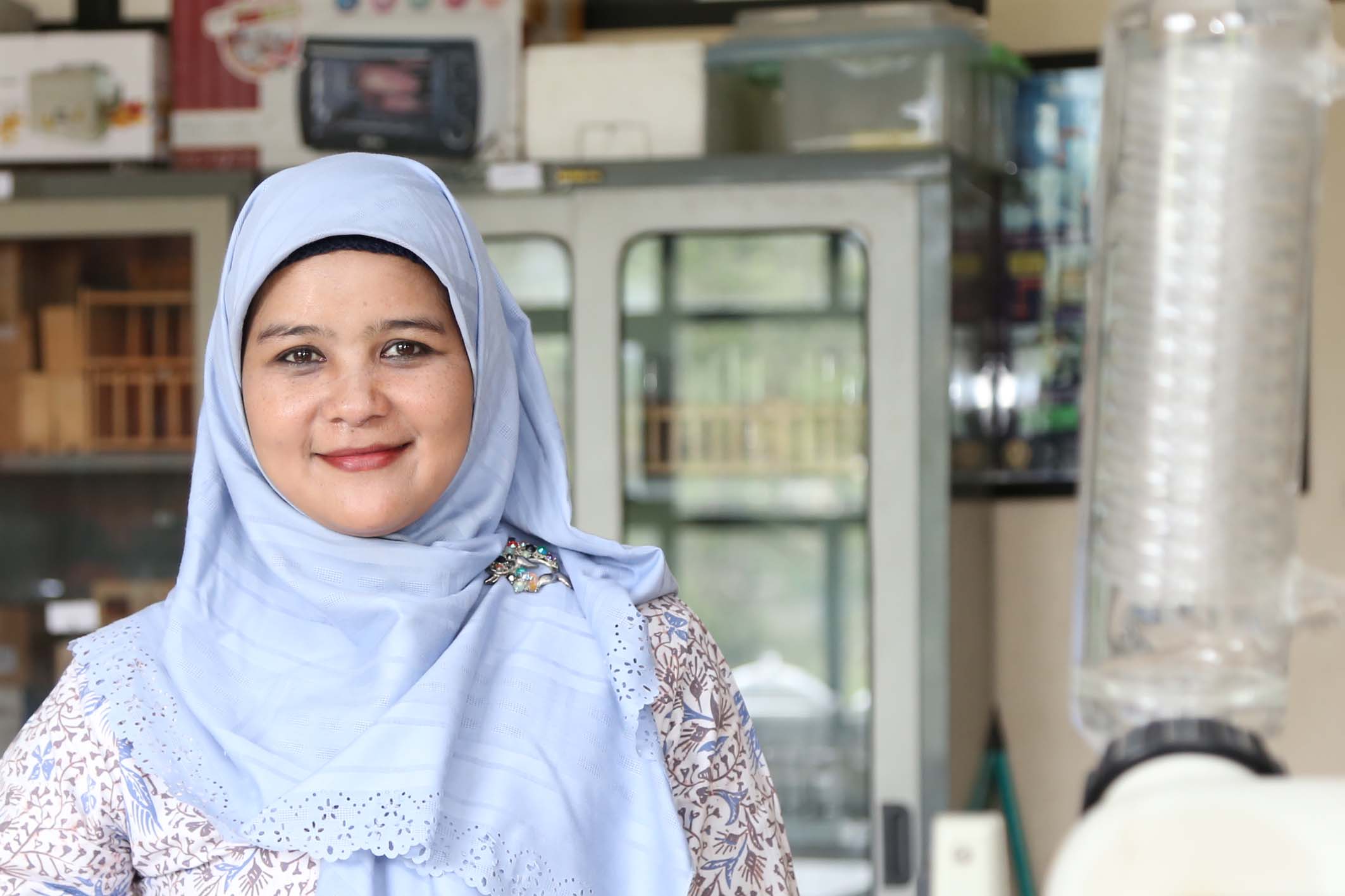
At first, Dr. Emma processed the crab shell waste into chitosan. Chitosan can also be used in various fields, among others in the fields of biomedicine, agriculture, and food; one of them is as an ingredient to make a health drink. After being tested in vitro and in vivo (in mice C3H), it is believed that if consumed regularly with a certain dose, this drink can prevent breast cancer.
“So I made the chitosan became edible film first, then put it into the formulation of beverages,” said Dr. Emma when met at his office on Monday (09/26).
To obtain an anti-cancer benefits, this drink can be consumed one to two drinks per day. Dr. Emma also revealed the reason cultivate the chitosan into a health drink. According to her, it became handy beverage for consumption and will not give the impression that the product is a medicine.
“The reason I made in the form of drinks, so that the drink is not considered as medicine but as a fun and healthy drink,” said Dr. Emma, who now also serves as Chief of the Laboratory of Fishery Products Processing FPIK Unpad.
To be able to be produced on an industrial scale or directly tested in cancer patients as part of treatment, Dr. Emma admits there are still a series of research that must be done.
“This is a safe food. But the need to step deeper, meticulously, “said the woman who was born in Bandung, June 28, 1971.
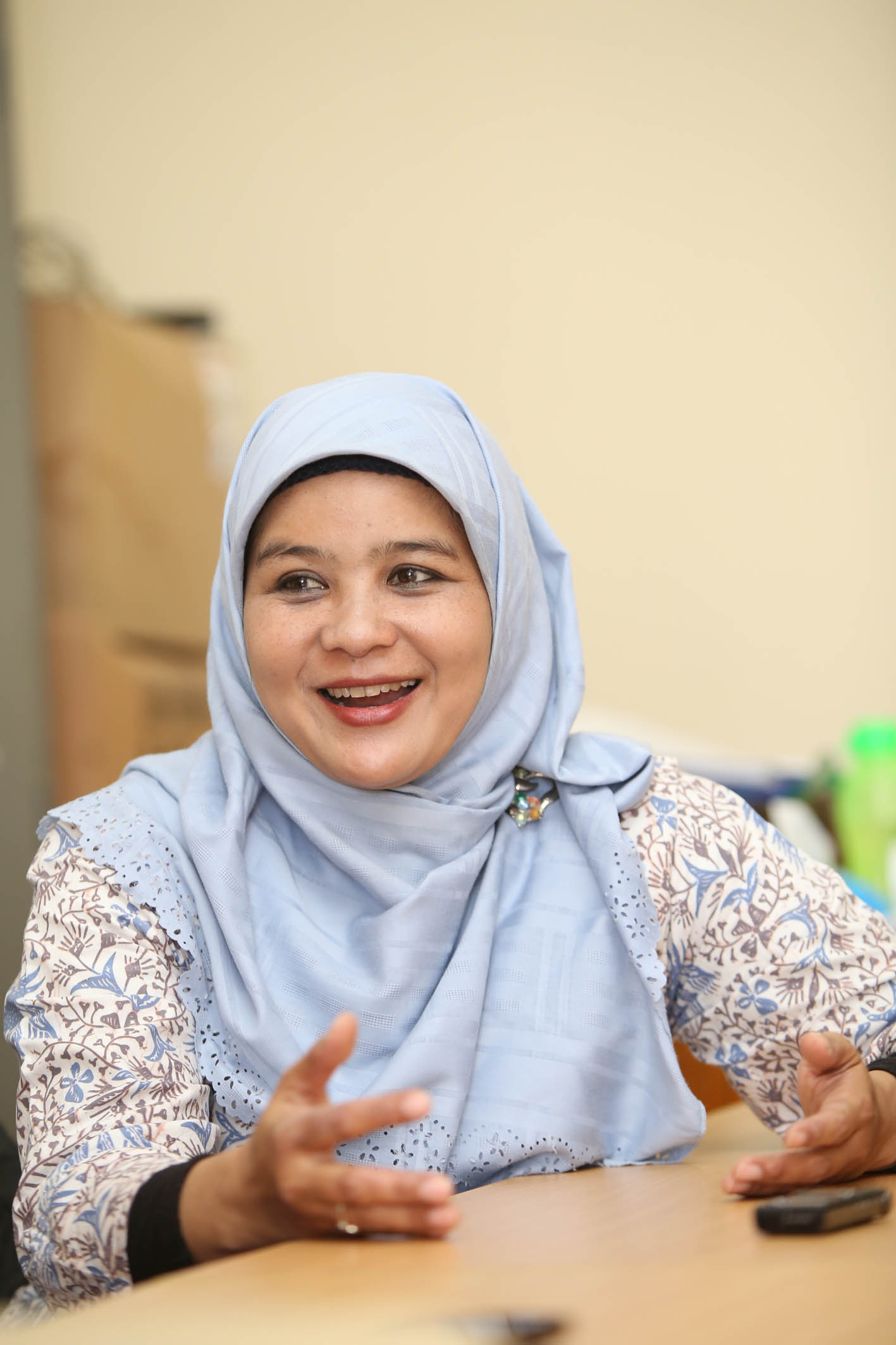 In addition to a food and health products, chitosan also has many benefits. In agriculture, for example, chitosan is also used as a disinfectant. Chitosan is considered more secure than pesticides, and will not interfere with the development of plants. In addition, chitosan is also widely used to purify water from heavy metal waste, chromatographic matrix material, and much more.
Aside from crab shells, chitosan can be derived from other materials, such as the shells of shrimp, mushrooms, and so on. Dr. Emma preferred to cultivate shell crab because apart from being untapped waste, there are also many other benefits of any chitosan manufacturing process of these materials.
Dr. Emma explained that to make chitosan from shells of crab required a series of processes, ranging from Deproteination (removing protein), decalcification/demineralization (removing calcium / mineral), bleaching (eliminating pigment), until deacetylation (removing acetyl groups from chitin into chitosan) , When deproteination and declassification eg, protein and calcium that is wasted, can be used again for the fortification of other food products. Moreover, from the bleaching process, the resulting pigment can also be used to increase the productivity of ornamental fish.
“The process of making the chitosan has been through a system that produces zero waste byproducts such as protein, calcium, and a pigment or dye,” she explained.
Dr. Emma also revealed that this time, people in Cirebon coast are beginning to realize the importance of increasing the value of shell crab. Dr. Emma and the team often socialized the matter to the coastal communities explaining the importance of the crab processing waste, in particular to be chitin and chitosan.
Various studies have actually linked chitosan with Dr. Emma path since 2002, and continued development of the research up to now. Currently, Fishery Processing Laboratory is working with Nano Technology Research Center, Universitas Padjadjaran to conduct research on the use of nanotechnology in the food sector. Dr. Emma also is developing nano chitosan research, in order to increase the effectiveness of chitosan benefits in the body.
“So with the chitosan I created, I changed the particles into nano particles. So it is more rapidly absorbed by blood, “said Dr. Emma.
In the form of nano, there will be many more benefits that can be obtained from chitosan. Aside from being a beverage, nano chitosan can also be used as a food wrapper that is safe and environmentally friendly. In the field of health, nano chitosan will also be useful as a carrier substance (drug delivery) so that cancer can be more effective work in the body and does not interfere with other normal cells.
“Therefore Fishery Products Processing Lab prepared chitosan preparations in the form of powder, flakes, solution, or dispersion which will be tailored to the application utilization,” said Dr. Emma. *
Reported by Artanti Hendriyana/ eh