[Kanal Media Unpad] For Dr. Melanie, M.Si., a professor of the Department of Biology at Unpad’s Faculty of Mathematics and Natural Science, weeds are not only wild plants without any benefit. Through research, Melanie has converted weeds into bioinsecticides for cauliflower plants.
For her dissertation, Melanie utilized the Lantana camara plant as bioinsecticides. However, the bioinsecticides she developed are different with other pest deterrent products already on the market. Generally, insecticides, especially chemical-based ones, have the ability to instantly kill pests.
There are various side effects of using chemical insecticides to often. For pests, it can develop their resistance toward the chemicals to the point where the next generation of pests will become more immune to those chemicals. Therefore, the pests will gradually be more difficult to control and farmers will be forced to increase the dose of chemical insecticides.
The use of chemical insecticides also threatens the ecosystem. The excessive use of chemicals will leave residue on the environment. Plants, and even the soil, will be susceptible to be polluted by residue. Furthermore, beneficial organisms in the soil will also die because of exposure to the insecticides.
“The chemicals, which have been thought of as a solution for all this time, instead becomes a new problem because they are not managed wisely,” said Melanie.
Even though, if we look at their natural state, each plant has natural defenses from pests. This secondary ability of the plant metabolites can be developed to become natural insecticides, which are far more secure to use than chemical substances. In short, attacks from nature can be repelled by natural products as well.
Using “Discarded” Ingredients
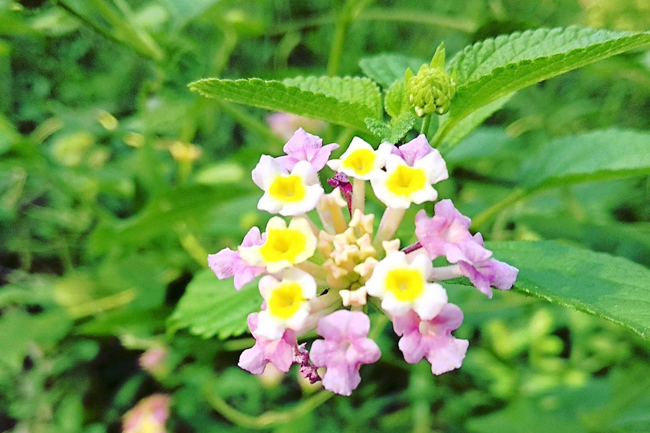
Melanie explained that, based on her study, there are a number of plants that contain secondary metabolite components. The components have bioactivity with special mechanisms which are not directly deadly but can impede the performance of targeted pests.
One secondary metabolite bioactivity is producing antifeedants. This activity can kill pests gradually. If a pest were to eat the antifeedant, it would impede its eating. Finally, it will stop eating, go away, or die slowly,” explained Melanie.
Based on a number of early studies, Melanie chose the Lantana camara because of the antifeedants. So far, the Lantana camara is not as popular as other plants for use as bioinsecticides. Moreover, the plant is often categorized as a weed, so it is often ignored and its use is neglected.
By impeding their feeding activities, cauliflower pests in the form of caterpillars will be easy to control, even if they do not directly die as opposed to when chemical insecticides are used.
“We don’t have to exterminate when we can control the population. The pests will indeed still exist, but gradually the population will shrink,” said Melanie.
Melanie explained that controlling the population of pests will have a role in preserving the food chain. Predators can still feed on caterpillars safely.
According to her, it is integral to preserve natural predators so the ecosystem stays balanced. The use of chemical insecticides instead eradicates natural predators. Therefore, the balance of the ecosystem will be disturbed. The caterpillars who are already resistant will experience an increase in population caused by the decrease in natural predators.
Using Nanotechnology
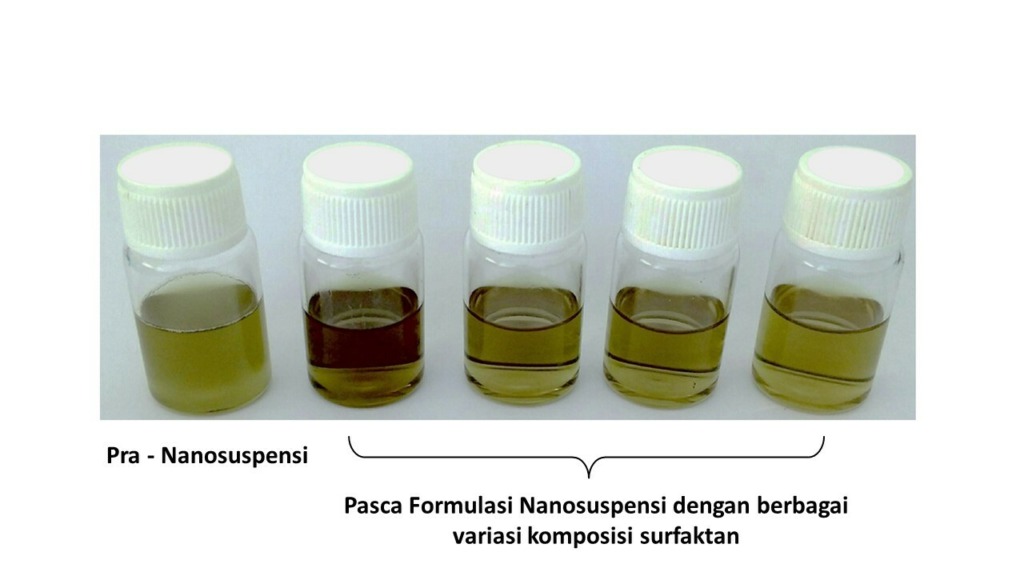
The alumni of the Environmental Science doctoral program from Unpad Postgraduate School further explained that the development of bioinsecticides made from Lantana camara used nanotechnology.
Current nanotechnology has developed in many aspects. One aspect that can be of use is in the formulation of bioinsecticides. The use of bioinsecticides which used nanosuspension formulas is considered to be more effective and efficient in controlling targeted pests, so it will not affect the surrounding environment.
Melanie elaborated that nanotechnology was also used to make plant extracts more easily dispersed in water. The extract from a Lantana camara is characteristically difficult to disperse in water.
So far, the extracts are normally mixed using toxic organic solvents such as methanol, as well as other additives as emulsifiers and adhesives which are not economical and efficient in their use.
Melanie used a more economical ingredient in a water-based medium which is safe to consume for humans and non-targeted organisms in the ecosystem. For that, she chose to use nanotechnology which is able to disperse the extract in a water medium with only one type of surfactant. This is considered more effective, efficient, economical, and safe.
Through nanotechnology, the extract is dispersed until it shrinks to nano size. The dispersion was done so the extract could be suspended in water. The smaller the powder, the more evenly they will spread in water.
However, the process does not end at dispersion. The extract was then emulsified so it was able to increase its adhesiveness to the surface of the leaves. With this, the ingredient could be more effective and stick more to the leaves’ surface.
Currently, the bioinsecticide prototype developed by Melanie is still focused towards repelling cauliflower-eating caterpillars.
“If we only need to use one arrowhead, why do we fire volleys?. Pests don’t have to killed, they can be manipulated so their eating process is disturbed by using antifeedants. Then the antifeedants are enhanced with nanotechnology,” she concluded.(arm/ICP)*