[Unpad Media Channel] Her career path as a lecturer and researcher led an Unpad Professor at the Faculty of Medicine, Prof. Rovina Ruslami, dr., SpPD, PhD, to research the treatment of tuberculosis. Although she never set out to become a researcher, let alone someone researching tuberculosis, the research done alongside her team has successfully enriched the global landscape of tuberculosis treatment based on their findings.
Prof. Rovina has researched tuberculosis for almost 20 years, specializing in its treatment. This started when she was undertaking her doctoral degree at Radboud University Medical Center in Nijmegen, The Netherlands, at the recommendation of her supervisor and colleagues.
Back then, research on the treatment of tuberculosis, specifically in pharmacology, on the Indonesian population was still rare. This is despite of Indonesia historically being a country with high rates of tuberculosis, never ranking below top 5 globally.
Aside from researching the pharmacology of tuberculosis treatment on Indonesian patients, Prof. Rovina also explored the efforts on optimizing tuberculosis treatment by utilizing high doses of rifampicin.
Drugs used to treat tuberculosis have existed since the 60s and 70s. Specialized treatment in the forms of therapy has been done since 1985. However, the research was almost never up-to-date, even though the treatment of tuberculosis is still problematic.
“The treatment of tuberculosis is complex, takes a long time, involves the patient taking many drugs, and yet there are still those who do not get better or even die because of tuberculosis. This is why we need to consider efforts to optimize the treatment of tuberculosis, so that the process is short, with the same drugs that are still just as potent, and is also safe for the patient,” Rovina said.
Instead of attempting to find new drugs, Prof. Rovina tried to maximize the use of a type of tuberculosis drug that has been in use since 50 years ago, named rifampicin. It is considered the most important drug in the treatment of tuberculosis. This is because research to find new medicine usually requires at least ten years of duration and a huge budget.
Meanwhile, the need to optimize the treatment of tuberculosis is urgent. By understanding the properties of rifampicin as a treatment for tuberculosis, its use can be optimized through the modification of either the dosage or the administering process.
The results of her research showed that, by increasing the dose of rifampicin as much as 1/3, the amount of medicine in the patient’s body can triple but with the same safety profile as the usual dosage.
When she was almost done with her doctoral program, Prof. Rovina came across an opportunity to continue her studies in a post-doctoral program funded by a grant from the Royal Netherlands Academy of Arts and Sciences (KNAW).
“My promotor saw the opportunity and finally told me to make a proposal for a post-doctoral grant based on what we were researching in my doctoral program, and apply it to tuberculosis meningitis,” she explained.
In 2009, research surrounding tuberculosis meningitis, or tuberculosis affecting the meninges, was still lacking. This is despite the fact that the disease is very deadly, or leaves surviving patients with lifelong disabilities.
That “challenged” Prof. Rovina to implement her research to the treatment of tuberculosis meningitis.
“Back then, I felt pressured in making the proposal as I was still busy preparing for my dissertation defense,” remembered Prof. Rovina. “However, my promotor convinced me that I was able and that that was a good opportunity,” she added.
Prof. Rovina would go on to be awarded a post-doctoral grant of 50 thousand euros, a relatively small amount at that time. Although she had to be convinced to do the research, the results turned out to be unexpected.
The 1/3 increase of rifampicin dose, as well as administering it through injection, turned out to be able to increase the recovery rate of tuberculosis meningitis patients by 50% compared to patients treated with the usual dose of rifampicin.
In other words, the mortality rate of patients who were injected with a higher dose was half of that of patients treated with the normal dose, while the safety profile differed little between the two.
Injection was chosen so the components of the drug could more effectively enter the body. Prof. Rovina explained that tuberculosis meningitis patients often are extremely ill and experience difficulty in taking drugs orally.
The absorption process is also disrupted often. This results in the dosage of medicine in the patient’s blood being lower. Injection is the method of administering a liquid into a person’s blood vessel using needles, thus making the drug able to enter wholly into the body so the dose and the effects can be optimized.
Prof. Rovina explained that the results of the study were published in the renowned scientific journal Lancet Infectious Disease in 2013. The scientific publication succeeded in opening new insights into the treatments of various forms of tuberculosis, such as tuberculosis in the lungs, tuberculosis meningitis, or latent tuberculosis infections. Furthermore, the results of the research team have also become a standard for other researchers in different countries
“Currently, there is not one study in the world that does not use high doses of rifampicin in an effort to optimize tuberculosis treatment,” she said.
Researchers from various countries have used Prof. Rovina’s, and her team’s results as a base on which to carry out further research. This is done to figure out whether the use of high doses of rifampicin could optimize the treatment of tuberculosis, not only tuberculosis meningitis on Indonesian adults but also other types of tuberculosis and patients, such as children and people from around the world.
A Chance to Improve on WHO Guidelines
As of now, high doses of rifampicin for tuberculosis meningitis is going through the last phases of testing, specifically in phase 3 of its clinical trial involving a number of institutions and patients from various nations and continents containing around 500 adult sufferers of tuberculosis meningitis. The clinical trial has been going on for 2 years, and is expected to conclude in 2 or 3 years.
“Our research mainly surrounds tuberculosis meningitis on adults, and only on Indonesian patients, many of whom are Sundanese. What we found about Indonesian patients could be different than if it were implemented on patients of other ethnicities or children, for example. Our bodies have different genetics with others’. This is why people from different countries try to apply rifampicin in high doses to their population,” she explained.
If these studies succeed in showing a clear benefit, we hope that there is an improvement in the WHO guidelines for treating tuberculosis meningitis, which would then become the new standard in treating tuberculosis meningitis around the world.
The aim of doing research is, aside from the knowledge itself, for the common good, and for the patients. Although it is still not officially included in the WHO guidelines, the results of research done by Prof. Rovina and her team have been carefully applied to treating tuberculosis meningitis by clinicians while they wait for results from a clinical trial of a larger scale.
Winning International Awards
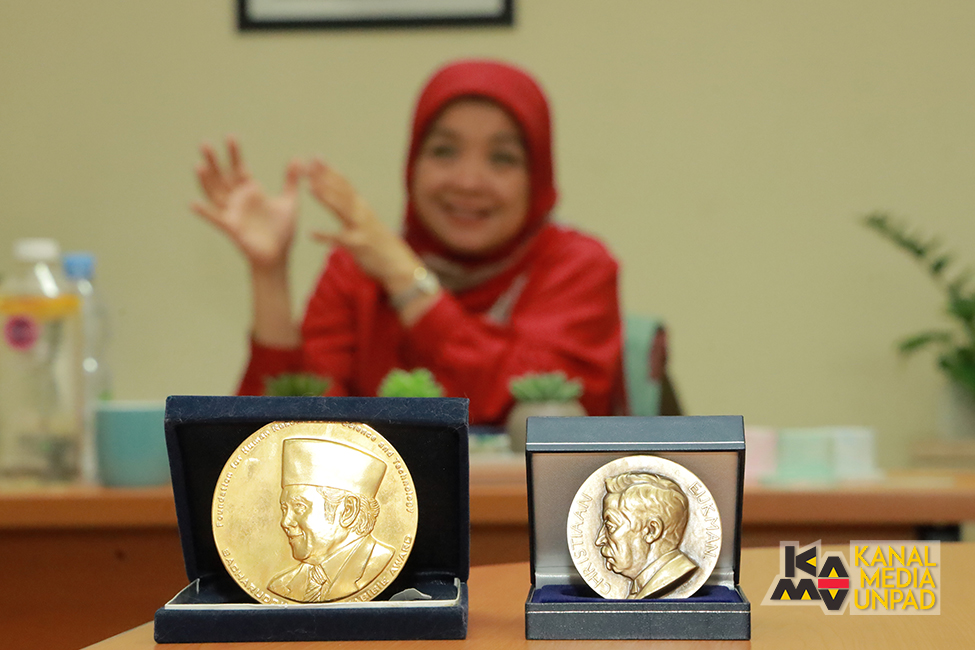
Prof. Rovina’s hard work, which was supported by many parties such as boards and institutions, has garnered appreciation. In 2018, Prof. Rovina was awarded the Habibie Award in health from Yayasan Sumber Daya Manusia untuk Ilmu Pengetahuan dan Teknologi.
More recently, Prof. Rovina was awarded The Christiaan Eijkman Medal by The Eijkman Foundation in collaboration with The Royal Tropical Institute in The Netherlands, on September 1st. The award was given to prominent researchers carrying out research surrounding issues in global health.
In the beginning, the award, which has been handed out since 1927, is only reserved for Dutch researchers. It was only this year when the Eijkman Foundation and the Royal Tropical Institute started to present similar awards to researchers from outside of The Netherlands as appreciation for the research done.
Interestingly, Prof. Rovina was the first person from outside of The Netherlands, as well as the first Indonesian, to ever be given the award. As of now, 53 researchers have received the award, including Prof. Rovina.
For this achievement, Unpad also gave the Anugerah Padjadjaran Utama award to Prof. Rovina at the events of Lustrum XIII, September 11th, 2022. (arm/ICP)*