[Unpad.ac.id, 17/03/2016] Implementation of Mutual Recognition Arrangement (MRA) within a region can solve various problems, including welfare improvement of the people in each country through their cooperation. With MRA, a country can receive services, goods, and human resources from other countries that have been standardized.

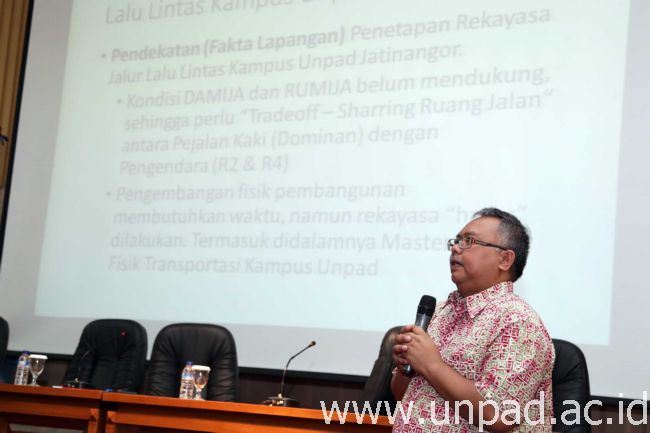
“MRA becomes one option that should be taken in order to allow a joint effort to improve people welfare in each country,” said the lecturer at the Faculty of Medicine (FK) Unpad, Dr. med. Setiawan, dr. at Asian Community Building Lectures in Bale Sawala Rectorate Building, Jatinangor, Wednesday (16/03).
In health field, Dr. Setiawan explained that there are four forms of MRA. Cross-border trade, for example, performs telemedicine through interstate. Consumption abroad was for the example of Indonesia patient visiting hospitals in other countries. Commercial presence, for example, was the presence of foreign hospitals in the country. Other form of MRA was a further form of presence of natural persons, for example, Indonesia doctors to provide services in other countries.
With MRA, the imbalance between supply and demand in the region could be addressed. For example, when we are in short of medical personnel, then the requirement could be met by personnel from other countries. In addition, the presence of foreign workers in Indonesia would encourage and improve the quality of personnel in Indonesia continuously.
According to Dr. Setiawan, MRA was a challenge and opportunity for Indonesia. Nowadays, seen from the regional competitiveness index and the human development index in Asia, Indonesia is ranging in the middle class.
“We can advance according to the needs. Fording partnership with developed countries, for example, to perform transfer of technology. On the other hand we can distribute labor requirements for other countries in need,” he explained.
To implement MRA, one of the main requirements was preparing regulations, which are related to recognition and their standard procedures and mechanisms. Regulation and implementation should go hand in hand.
“Regions must have willingness to understand each other, so domestic regulation was pursued to confirm with policies and regulations in the region. Make sure every country submit to the agreement, so mobility would not be hampered, “said Dr. Setiawan.
Furthermore, Dr. Setiawan also invited students to meet the challenges and opportunities in the MRA. Therefore, it was necessary to improve their self-quality, language skills, to possess good cross-cultural horizon with mobility, to posses a good information technology capabilities, to be fast and life-long learner, and becoming a global citizenships with good leaderships.
Besides Dr. Setiawan, speaker from lecturer at Universitas Pendidikan Indonesia, Dr. Dianni Risda, M.Ed was present to discuss the Asian Education Network.
Reported by Artanti Hendriyana / eh