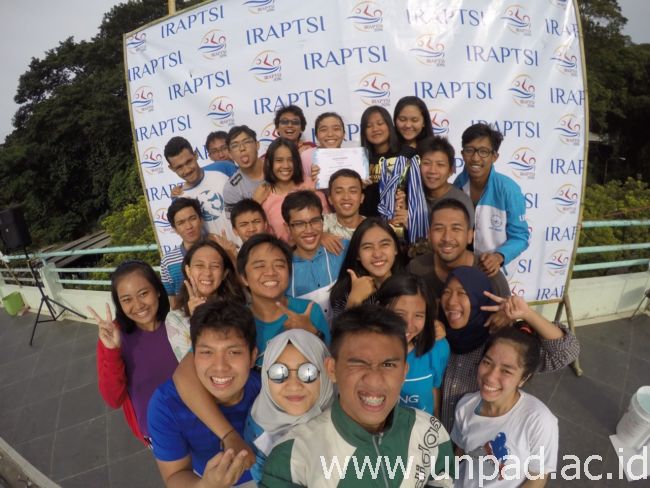
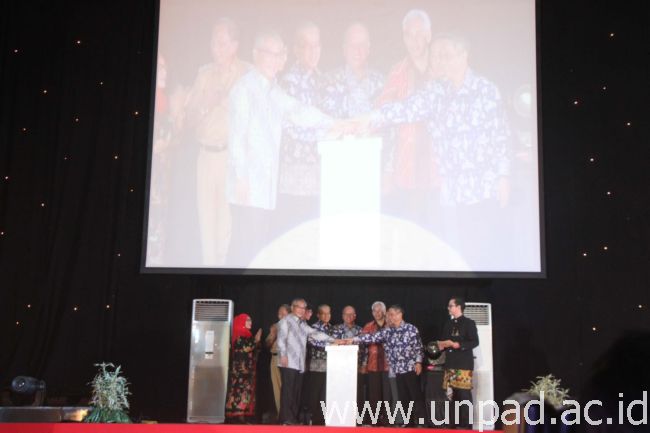
[Unpad.ac.id, 13/01/2016] Two students of the Master of Environmental Science (PSMIL) Universitas Padjadjaran, Iga Maliga and Yuda Gojali Ahmad Nurhidayat participated in Sakura Exchange Program in Science at the Graduate School and Faculty of Bioresource in Mie University Japan last December 2015. For 10 days, they attended public lectures, visited the laboratory, as well as research locations that were research focus studies in Faculty of Bioresources, Mie University.
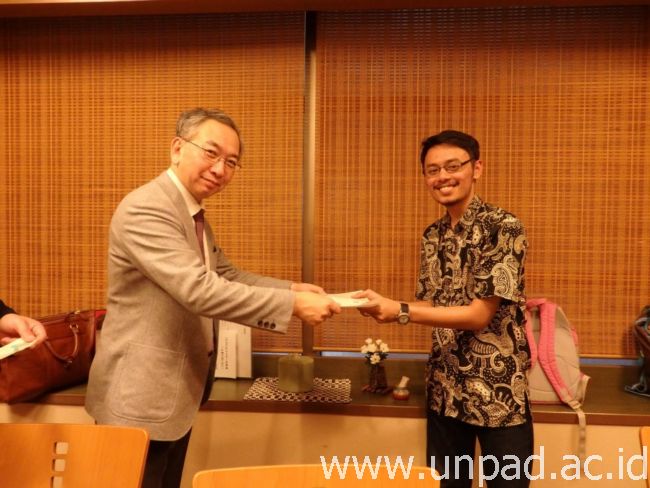
Iga and Yuda were selected with eight other representatives of Bogor Institute of Agriculture, Universitas Sriwijaya, and Universitas Halu Oleo. Japan Science and Technology Agency (JST) through Mie University, conducted the selection process, based on English proficiency of students and students’ research areas. The program was organized in order to invite young people who hold an important role in the future to be able to obtain latest information in relation to the Japanese application of science and technology.
Iga Maliga, in a release received Unpad PR, stated that she is deeply interested and excited during her visits to a few laboratories in Faculty of Bioreseources in Mie University. The visits have given her enthusiasm that can be used as a reference study in Indonesia.
The participants were impressed at how system of cooperation is established between universities, governments, communities, businesses, and various other stakeholders in Japan. In Japan, research is conducted in accordance with the needs of society or aimed at improving quality of a product that will be directly applied by the community.
Iga and Yuda were selected with eight other representatives of Bogor Institute of Agriculture, Universitas Sriwijaya, and Universitas Halu Oleo. Japan Science and Technology Agency (JST) through Mie University, conducted the selection process, based on English proficiency of students and students’ research areas. The program was organized in order to invite young people who hold an important role in the future to be able to obtain latest information in relation to the Japanese application of science and technology.
Iga Maliga, in a release received Unpad PR, stated that she is deeply interested and excited during her visits to a few laboratories in Faculty of Bioreseources in Mie University. The visits have given her enthusiasm that can be used as a reference study in Indonesia.
The participants were impressed at how system of cooperation is established between universities, governments, communities, businesses, and various other stakeholders in Japan. In Japan, research is conducted in accordance with the needs of society or aimed at improving quality of a product that will be directly applied by the community.
“They are truly applying results of completed research and taking them into consideration for local government in terms of taking the policy. Their punctual punctual and responsible with their respective duties culture should be taken as example, “said Yuda Gojali.
Field visits to the Marine Station in Shima City, a research and a site of cultivating a wide variety of marine resources such as fish, lobster, and pearls, also provided new experiences and knowledge to the participants. This was particularly because Indonesia is also a country that possesses good potential in terms of marine resources, especially pearls.
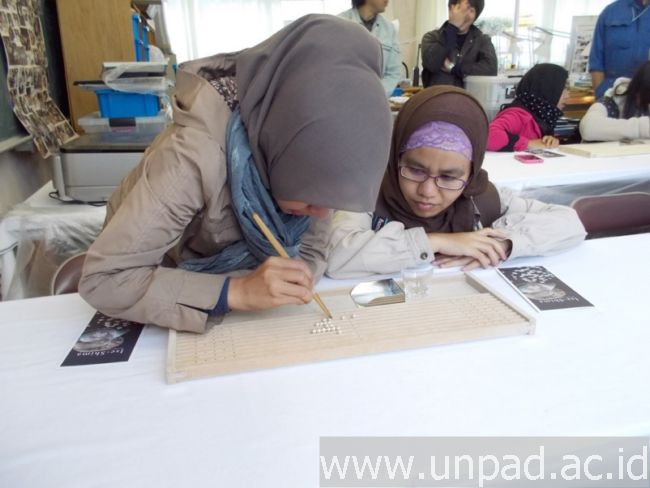
After observing shells and pearl cultivation methods conducted in Japan, the cultivation that was done in Indonesia was considered not yet maximum, thus resulting in also less maximum quality. Whereas the warm temperature in Indonesia is one of the important factors for pearl mussels can live and produce shells with good quality.
The participants realized that the lack of further attention would result in lack of research done to improve quality of generated resources. This was one of the obstacles encountered in Indonesia, and this condition did not only apply to cultivation of pearls alone, but also in management of other natural resources. Definite steps that can be done were supporting government in direct application of research results of students as method to improve quality of the environment and humans.*
Released by PSMIL Unpad / art