[Unpad.ac.id, 16/09/2016] The Indonesia’s pharmaceutical industry is one of the biggest in ASEAN and contributed approximately 27% of the total pharmaceutical market share of ASEAN. At the world level, the pharmaceutical industry Indonesia ranked at top 23, and was estimated to increase to the top 20 in 2017. However, 90% of pharmaceutical raw materials in Indonesia are still imported from other countries, especially China and India.
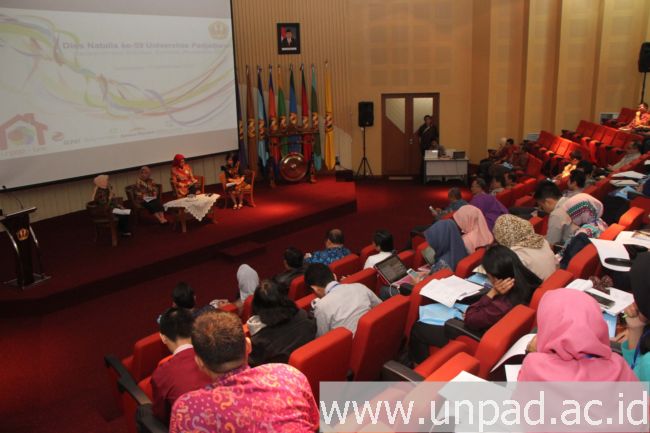
“This fact showed that the structure of the pharmaceutical industry in Indonesia is not ideal and still limited to the formulation. Hence there is a need to attempt self-reliance in the field of medicinal raw materials and traditional Indonesian medicine through the use of biodiversity that were synchronized harmony and supported by a comprehensive strategic alliance, “said Director of Pharmaceutical Services for the Ministry of Health, Dra. Dettie Yuliati, Apt., M.Sc., as a guest speaker at Pentahelix seminar entitled “Independence of Pharmaceutical Raw Materials” at Bale Sawala Universitas Padjadjaran, Thursday (15/09).
The seminar was organized in a series The 59th Unpad Anniversary with keynote speakers from various parties. In the first session, in addition to Detti Yuliati from the Ministry of Health, Dra. Rumondang Simanjuntak, Apt of Food and Drug Monitoring Agency (POM), and Dr. Keri Lestari, M.Sc., Apt., From Universitas Padjadjaran also attended. In the second session, discussing the theme of “Salt & Sugar Pharmaceuticals Collaboration” presented speakers from Kimia Farma, Rajawali Nusantara Indonesia, and Universitas Padjadjaran. Meanwhile in the third session, discussing the theme “Collaboration Model and Downstream Pharmaceutical Product Research”, the speakers were representative from Health BPJS, Unpad SOE Center of Excellence, Indonesian Pharmaceutical Manufacturers Association, as well as media representatives from Indonesia.
According Dettie, challenges for the pharmaceutical industry raw materials in Indonesia was the relatively small domestic market and the small profit margin against the large initial investment. In addition, the availability of local resources and technology manufacture of medicinal raw materials were also a challenge.
“These conditions caused the medicine raw materials industry Indonesia cannot compete with the global price,” said Dettie who are an alumna of Pharmacy Unpad.
Same with Dettie, Rumondang Simanjuntak of POM said that the national pharmaceutical industry’s dependence on raw materials imported drugs created the control of medicinal raw materials become a critical aspect in achieving the independence of medicinal raw materials.
“Industrial raw materials may increase its competitiveness for local pharmaceutical industry in order to accelerate the process of production of the finished drug and to support the availability of drugs in the community with efficacy, safety and quality assured, and affordable prices,” said Rumondang.
Meanwhile Dr. Keri said that the world has 40 thousand species of plants, and 30 thousand of them in Indonesia. A total of 9,600 of them have efficacy as a drug, and 400 species have been used as traditional medicine.
“Yet the striking fact was that Indonesia only had 43 standardized herbs and 7 phytopharmacas,” said Dr. Keri who has served as Dean of Faculty of Pharmacy Unpad. *
Presentation Material Attachment:
- kemenkes-unpad-pentahelix-fn-edit
- bahan-presentasi-kebijakan-dan-regulasi-bbo-final-15-sept-16
- dr-keri-pentahelix-dlm-pengembangan-bahan-obat-dies-unpad15-september-2016
- prof-husein_sukrosa_final_presentasi_pentahelix
- paparan-rni-unpad-15092016-ver-1s
- kf-unpad-bhn-baku-15-sept
- bahan-gpfi
- materi-seminar-pentahelix-unpad-fi-bpjs-kesehatan-120916
- kolaborasipentahelixfarmasiunpadsept2016
- bce_collaboration_model
Reported by Erman